


New Bedford’s architectural history is closely tied to the city’s rise as one of New England’s great industrial and commercial centers. Among the architects who helped shape the city during the early twentieth century was Louis E. Destremps, a Canadian-born American architect whose work left a distinctive mark on New Bedford’s streets, schools, commercial buildings, and entertainment venues.
Destremps was born on June 9, 1875, in Montreal, Quebec. Architecture was a family tradition. His father, Louis G. Destremps, was an architect who established his practice in Fall River, Massachusetts, and became known for his work in the region. After receiving his early education in New York City, Louis E. Destremps moved with his family to Fall River, where he entered his father’s architectural office at the age of eighteen.
For four years, the younger Destremps worked alongside his father before moving to Newport, Rhode Island, where he joined the architectural firm of Andrews & Withers. His professional experience also included work in the firm’s New York office. These years exposed Destremps to architectural practices in several important northeastern cities and helped prepare him for an independent career.
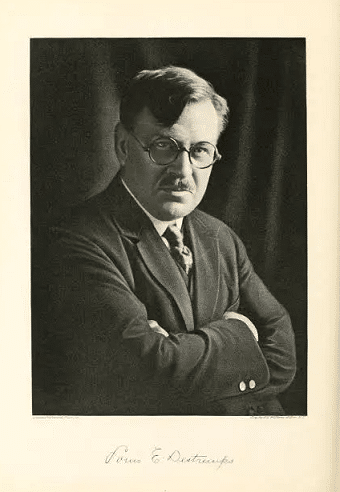
In 1897, Destremps married Antonia Latrobe of Pittsfield, Massachusetts. The couple eventually had three children. By the beginning of the twentieth century, Destremps had developed the experience and professional connections necessary to establish his own architectural practice.
A New Bedford Architect
In 1905, Louis E. Destremps moved to New Bedford and opened his own office in the Masonic Building. The timing was significant. New Bedford was undergoing tremendous growth and transformation, driven by its long-established maritime economy and, increasingly, by its textile industry. New commercial enterprises, schools, theaters, industrial facilities, and civic buildings were needed to serve a growing population.
Destremps quickly became one of the area’s prominent architects.
His work reflected the changing character of New Bedford. Rather than concentrating on a single type of building, he designed a wide variety of structures, from schools and commercial blocks to transportation facilities and places of entertainment. His buildings became part of the everyday landscape of the city and its surrounding communities.
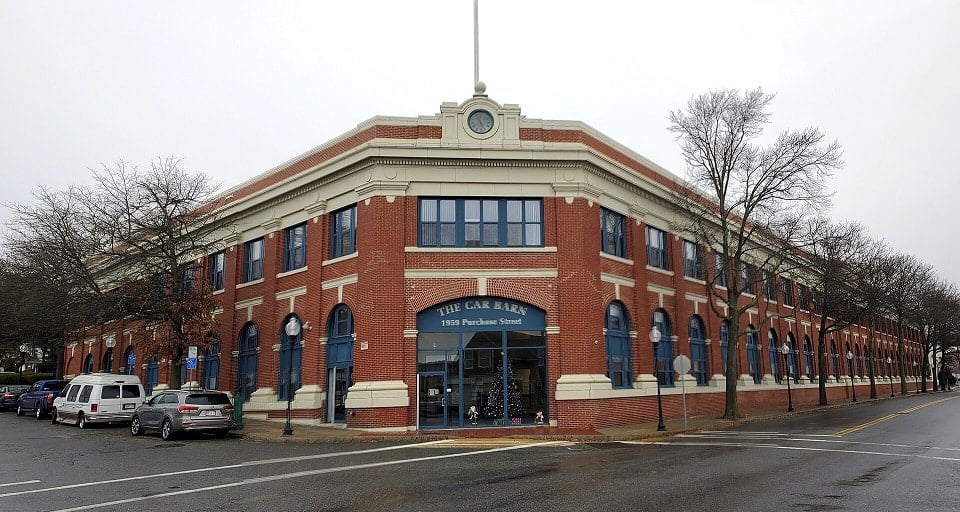
Among his best-known New Bedford projects were the Star Store, the Orpheum Theatre, the Union Street Railway Carbarn, the Elks Building, and several public school buildings.
The Star Store
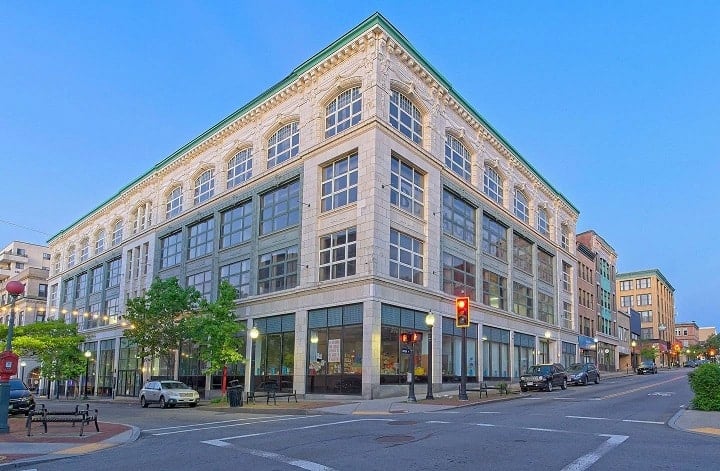
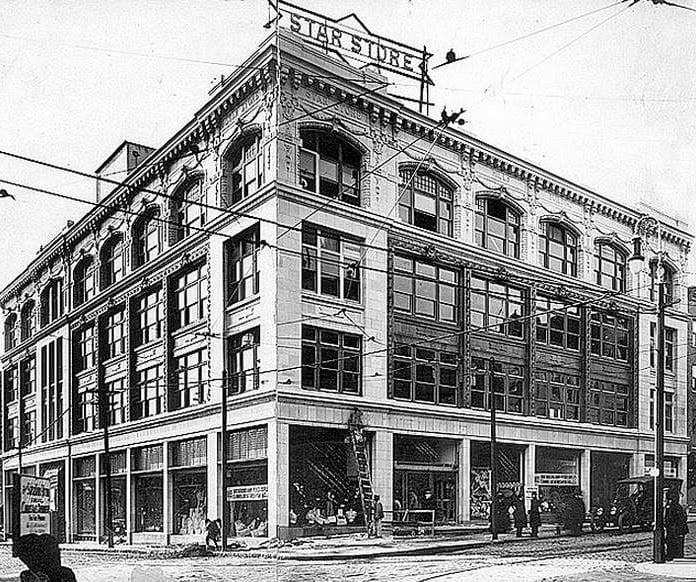
One of Destremps’ most important contributions to New Bedford architecture was the Star Store, a major commercial building associated with the city’s downtown business district.
Buildings such as the Star Store represented the commercial ambitions of early twentieth-century New Bedford. Large department stores and retail establishments were more than places to shop; they were architectural statements of prosperity and urban growth. Their substantial façades and prominent locations helped define the character of the downtown streetscape.
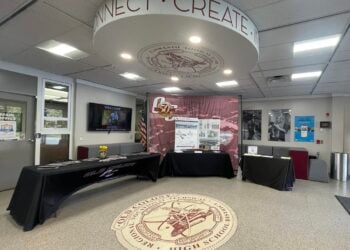
Today, the Star Store has taken on a new life as part of the University of Massachusetts Dartmouth’s College of Visual and Performing Arts. Its continued use illustrates one of the most important themes in New Bedford’s architectural history: historic buildings can survive by adapting to new generations and new purposes.
The Orpheum Theatre
Destremps is perhaps most closely associated with the Orpheum Theatre, completed in 1912.
The theater reflected the popularity of live entertainment in early twentieth-century America, when vaudeville, theater, music, and other forms of performance were becoming important parts of urban life. For New Bedford, the Orpheum was both an entertainment destination and an expression of the city’s cultural vitality.
Its construction demonstrated that New Bedford was not simply an industrial city. It was also a place where residents could gather for entertainment and cultural experiences in a purpose-built architectural setting.
The Orpheum remains one of the most recognizable reminders of Destremps’ architectural legacy in the city.

Architecture for a Growing City
Destremps’ work extended beyond commercial and entertainment buildings. He also designed several schools, including the Winslow School, Lincoln School, and Jireh Swift School.
School architecture was particularly important during a period when New Bedford’s population was growing and public education was expanding. New school buildings had to accommodate larger numbers of students while providing modern facilities for instruction.
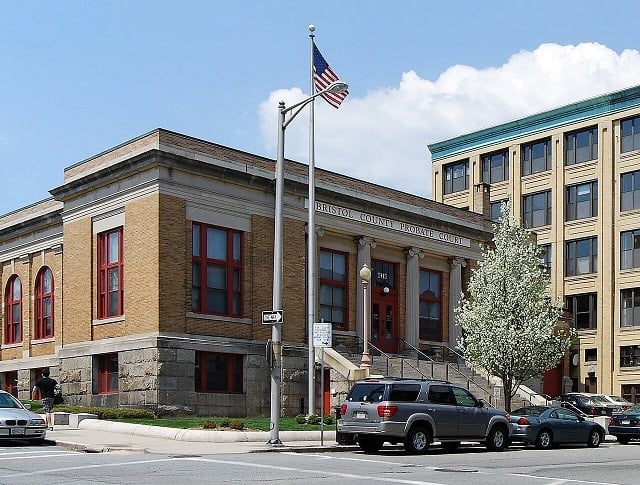
Destremps also designed the Third District Court Building, contributing to the civic architecture of the community, and the Union Street Railway Carbarn and Repair Shop, reflecting another aspect of New Bedford’s development: the expansion of street railway transportation.
Taken together, these projects reveal the breadth of his practice. Destremps was not simply designing individual buildings. He was helping create the physical infrastructure of a modern city.
A Regional Architectural Legacy
Louis E. Destremps’ career also illustrates the close architectural connections among the cities and towns of southeastern New England. His professional life stretched from Montreal and New York to Fall River, Newport, and New Bedford. His father’s practice in Fall River and his own later career in New Bedford placed him within a regional architectural tradition shaped by the economic growth of the textile and maritime cities of Massachusetts and Rhode Island.
In 1919, Destremps’ architectural practice was succeeded by LaBrode & Bullard, the partnership of Leo L. LaBrode and Egbert G. Bullard. By that time, however, Destremps had already left a lasting collection of buildings throughout New Bedford.
His legacy can still be read in the city’s architecture. The Star Store recalls New Bedford’s commercial past; the Orpheum evokes its entertainment history; the schools reflect the city’s commitment to public education; and the railway facilities document an era when electric streetcars connected neighborhoods and supported urban growth.
Remembering Louis E. Destremps
Historic architecture is often associated with the most famous architects or the grandest landmarks, but a city’s character is usually created by a much broader collection of buildings. Louis E. Destremps belongs to that larger story of New Bedford.
Working during a period of dramatic change, he designed buildings that served practical, commercial, civic, educational, and cultural purposes. His career coincided with a pivotal period in New Bedford’s history, when the city was evolving from its nineteenth-century maritime and industrial foundations into a modern twentieth-century community.
More than a century later, Destremps’ buildings help tell that story. They provide tangible connections to the people who lived, worked, shopped, traveled, attended school, and sought entertainment in New Bedford during the early 1900s.