


This Day in History: On the quiet morning of October 12, 2000, the Arabian Sea shimmered under a fierce sun as the guided-missile destroyer USS Cole (DDG-67) settled into the port of Aden to refuel. It was a routine military stop, a brief pause in a deployment that would soon be shattered by an act of unprecedented terror.
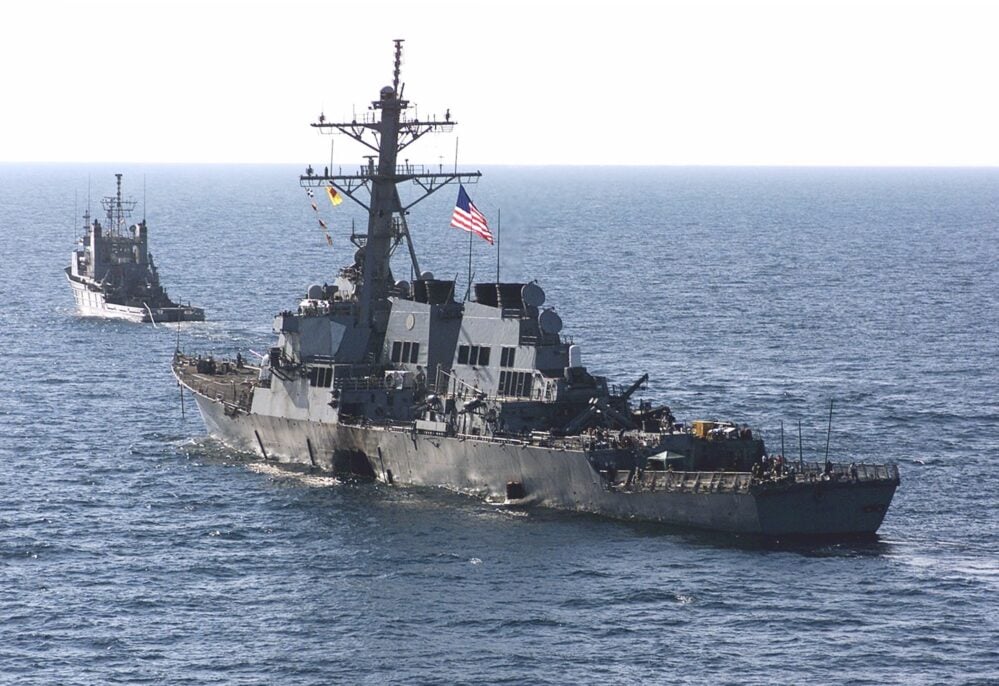
At approximately 11:18 a.m., peace was violently upended. A small, unassuming skiff drifted close alongside the towering warship’s port side, carrying suicide bombers operating under the banner of al-Qaeda . In a blinding flash of high explosives, the detonated craft tore a jagged, 40-foot gash into the ship’s hull, ripping straight through the crew’s galley and sending shockwaves deep into the vessel’s engineering spaces.
The Crucible of Survival
In the moments immediately following the blast, the Cole was plunged into a desperate fight for its very existence. Seawater rushed aggressively into the lower compartments, threatening to drag the multi-million-dollar warship to the floor of the harbor.
What followed was a harrowing display of naval discipline and raw courage. Cut off from standard power lines and working in pitch-black, smoke-filled compartments amid toxic fumes, the surviving crew mounted over 96 hours of relentless damage control. Working around the clock, sailors shored up bulkheads, fought stubborn fires, and managed to stabilize the listing destroyer, keeping the vessel from slipping beneath the waves.
A Costly Toll and a Changed Military
The human cost of the attack was devastating. Seventeen American sailors lost their lives, and 39 others sustained severe injuries. It marked the deadliest assault on a U.S. Navy vessel since 1987, exposing critical vulnerabilities in asymmetric threat environments.
The tragedy forced a sweeping realignment within the United States military. The Department of Defense and the U.S. Navy immediately overhauled their anti-terrorism protocols, threat assessment standards, and rules of engagement for vessels visiting foreign ports, forever altering how American forces operate abroad.
Journey Home and Legacy
Though severely wounded, the Cole refused to die. In late 2000, the destroyer was hoisted aboard the heavy-lift transport ship MV Blue Marlin and carried back to the United States. Following 18 months of intensive reconstruction in Pascagoula, Mississippi, the ship proudly returned to active duty in 2002—a floating testament to the resilience of its crew and a permanent scar on the timeline of modern naval history.