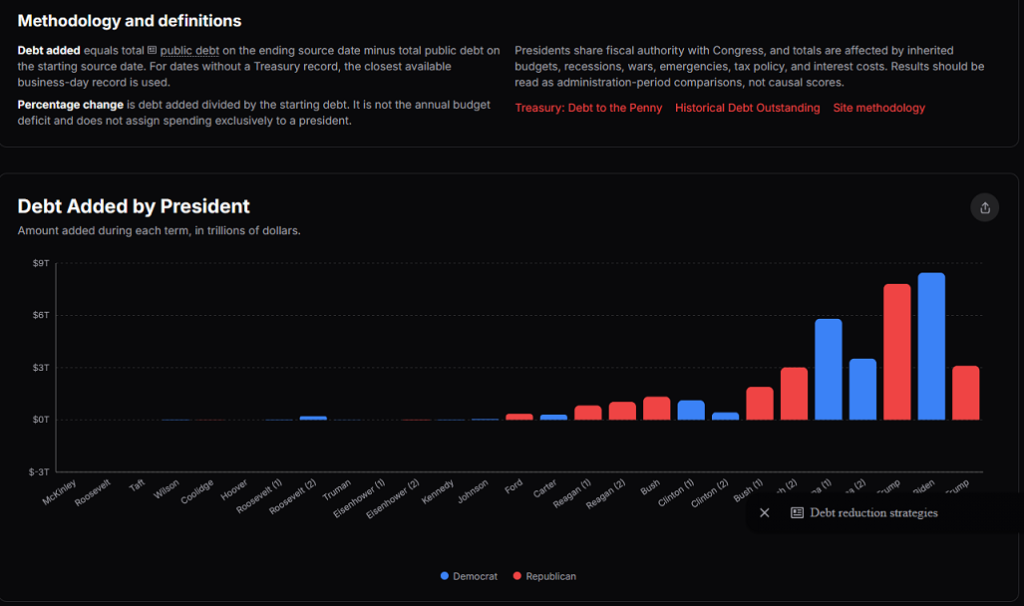



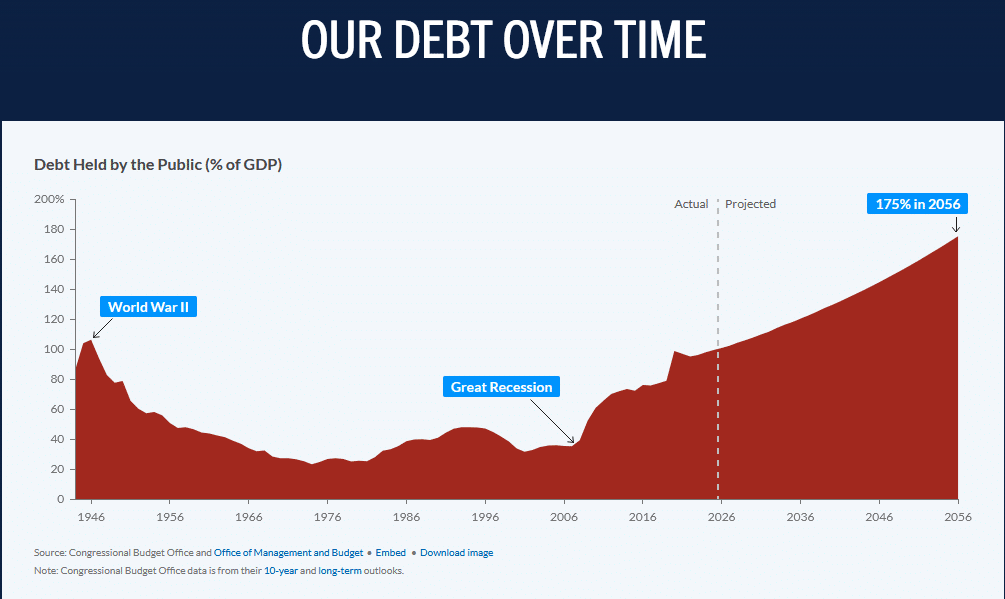
The United States has crossed a troubling milestone: national debt has surpassed $40 trillion for the first time in history. This is more than a staggering number—it is a warning that America’s fiscal trajectory is becoming increasingly difficult to sustain.
The problem is being driven by a dangerous combination of persistent deficits, rising government spending, insufficient tax revenue, and higher interest costs. As debt grows, so does the amount of taxpayer money required simply to service it. Every dollar spent on interest is a dollar that cannot be invested in healthcare, infrastructure, education, national security, or preparing for future challenges.
Demographics are making the situation even more urgent. America is aging rapidly as the Baby Boom generation enters retirement. About 10,000 Americans are expected to turn 65 every day through 2030, while people are also living longer. This is good news for individuals, but it places enormous pressure on programs such as Social Security and Medicare, which already represent major and growing demands on the federal budget.
Healthcare is another critical piece of the fiscal puzzle. The United States spends nearly one-fifth of its entire economy on healthcare—more than almost any other nation—without consistently achieving better health outcomes. Controlling healthcare costs and improving efficiency could both improve Americans’ quality of life and reduce pressure on the federal budget.
At the heart of the problem is a fundamental imbalance: the federal tax system does not raise enough revenue to pay for the spending and commitments already enacted. Without meaningful changes, annual deficits will continue adding to the national debt.
Meanwhile, America faces enormous demands for resources—from rising inequality and healthcare costs to education, climate challenges, and national security. A growing share of federal revenue is being consumed by debt service rather than addressing these priorities.
Who holds the debt matters as well. Domestic holdings of federal debt have risen dramatically, from roughly $7 trillion in March 2015 to $22 trillion at the end of December 2025. The Federal Reserve is the largest holder among domestic institutions, using Treasury securities as part of its efforts to influence interest rates and the money supply.
The $40 trillion milestone should not be treated as just another statistic. It is a call for action. America needs a serious, bipartisan effort to bring spending and revenues into better balance, reform the long-term costs of Social Security, Medicare, and healthcare, and strengthen the economy before debt and interest payments crowd out the investments needed for the next generation.
The longer we wait, the harder and more painful the choices will become. America cannot borrow its way indefinitely out of a structural fiscal imbalance.