



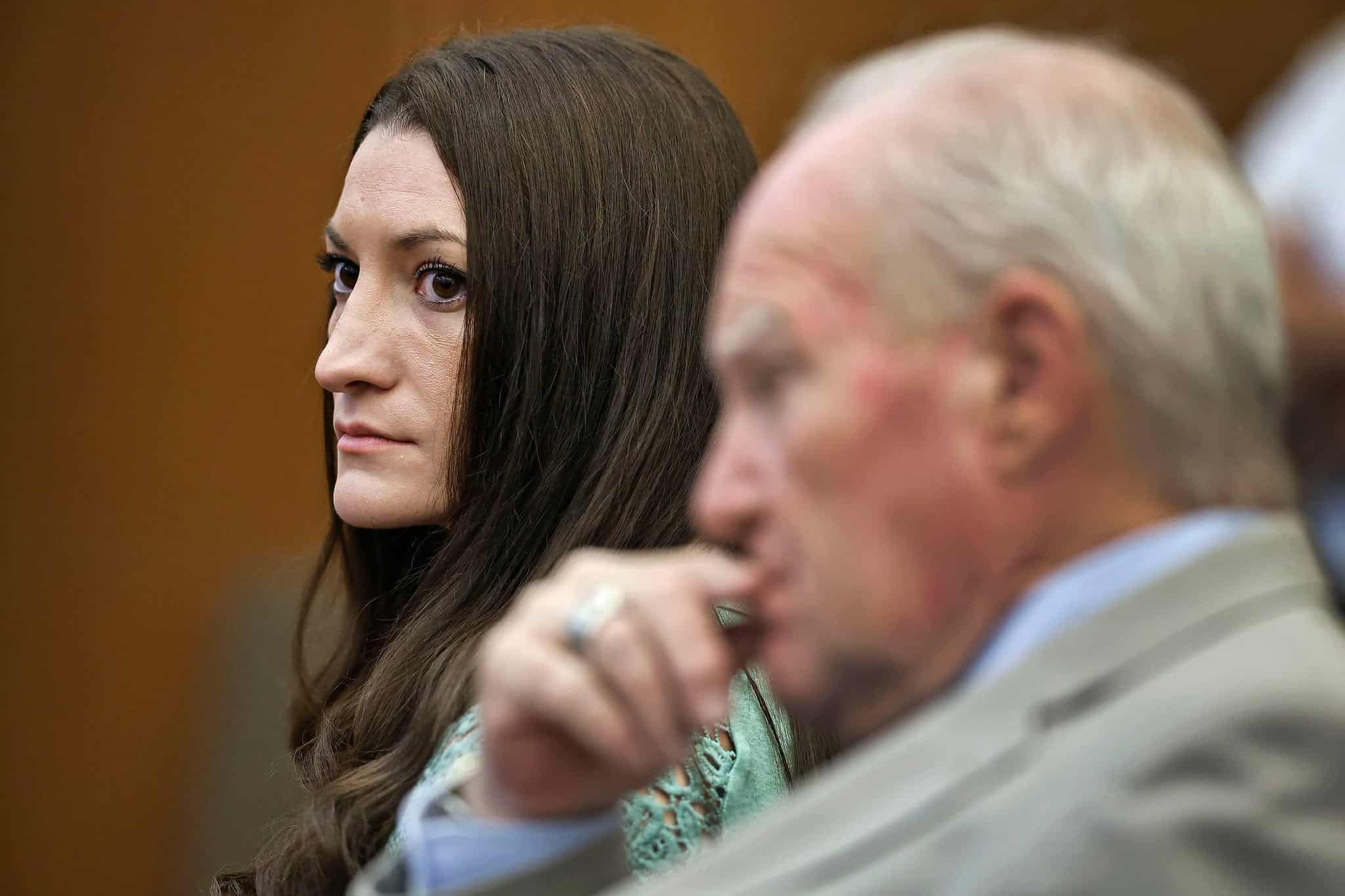
After three days of deliberations, the jury in the Lindsay Clancy trial still hasn’t reached a verdict. And that may say a lot about how complicated this case has become. This article is purely my speculation into the minds of the jurors, Clancy’s motivation and the extenuating circumstances around the case. I can confidently say that her husband should have never, ever left her alone with those kids if he had an ounce of common sense, but I digress. Do I think he had something to do with murdering his kids? No, but he’s lousy father.
Clancy has never denied killing her three children—5-year-old Cora, 3-year-old Dawson and 8-month-old Callan. The real question is what was happening in her mind when she did it.
The defense says Clancy was suffering from postpartum psychosis and had lost touch with reality. Prosecutors argue she was depressed and suicidal, but knew exactly what she was doing. Their theory is that she deliberately killed her children before trying to take her own life.
That leaves jurors with a difficult question: Does the evidence show someone who made a horrific decision, or someone whose mental illness had completely taken over?
The planning question
One issue could be whether Clancy’s actions were too organized to be explained by psychosis.
The children were killed, and Clancy then jumped from a second-floor window in an apparent suicide attempt. Prosecutors can point to that sequence as evidence of a murder-suicide plan.
But the defense could argue that planning doesn’t necessarily rule out psychosis. Someone can potentially act in an organized way while believing things that are completely disconnected from reality.
That distinction may be where the jury is struggling.
Her mental health history
Clancy had been seeking psychiatric help before the killings and had spent time in a psychiatric hospital. She was discharged less than three weeks before her children died.
That timeline is difficult to ignore.
It gives the defense evidence of a serious psychiatric breakdown, but it doesn’t automatically prove that she met the legal standard for being found not criminally responsible.
And that’s an important difference. The jury isn’t simply deciding whether Clancy was mentally ill. They’re deciding whether her illness was so severe that she couldn’t understand what she was doing or that it was wrong.
Why are they taking so long?
It’s tempting to assume a long deliberation means the jury is split. Maybe some jurors believe the defense has proved psychosis. Maybe others think the prosecution’s theory makes more sense.
But we simply don’t know.
With three victims, competing psychiatric experts and weeks of testimony, there is a huge amount for jurors to work through.
One possibility is that they’re looking for a middle ground. They could believe Clancy was severely mentally ill while still finding her legally responsible, potentially leading to a manslaughter verdict rather than murder.
The other possibility is that some jurors believe her mental illness was so severe that she should not be held criminally responsible at all.
The question that decides everything
In the end, the case may come down to one question:
When Lindsay Clancy killed her children, was she making a horrific decision while suffering from severe mental illness—or was she so disconnected from reality that she was no longer capable of understanding the wrongfulness of what she was doing?