



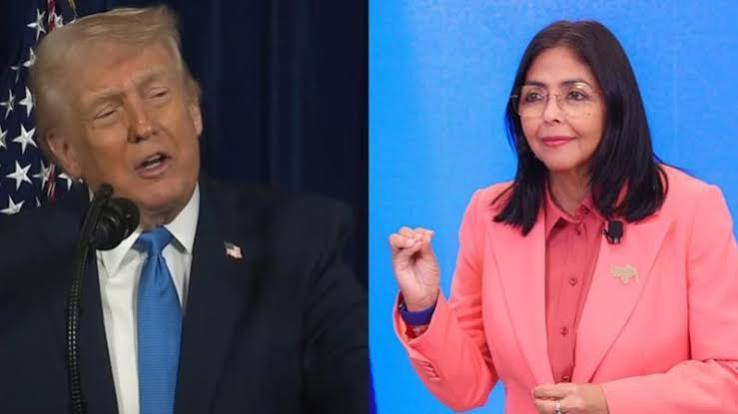
The Trump administration has announced what it portrays as an extraordinary economic prize: access to as much as 65 billion barrels of Venezuelan oil, supposedly obtained at no cost to American taxpayers.
The number is enormous. The questions surrounding it are even bigger.
The administration is presenting the arrangement as proof that its foreign-policy gamble has produced an energy bonanza—one capable of helping lower gasoline prices, strengthening American energy security and turning Venezuela’s vast petroleum reserves into an economic asset.
But a closer examination raises a more basic question: What, exactly, did the United States acquire?
Venezuela’s oil reserves are not a newly discovered treasure. They have been known for decades. Venezuela has long possessed the world’s largest proven oil reserves, much of them consisting of heavy crude that is expensive and technically difficult to produce and process.
The challenge has never been finding the oil.
The challenge has been producing it.
That distinction is critical, because the administration’s headline figure risks confusing a geological fact with an economic windfall.
The Oil Was Already There
The Trump administration did not discover 65 billion barrels of oil.
Those barrels were already underground.
What has changed is the political authority surrounding Venezuela’s petroleum industry and, according to the administration, the United States’ ability to exercise influence over the country’s oil resources.
That may be geopolitically consequential. It does not, by itself, make the reserves worth billions of dollars to American taxpayers.
Oil reserves become economically valuable only when they can be extracted at a competitive cost, transported to market and sold for more than the enormous expense of producing them.
Venezuela has struggled with precisely those problems.
Years of political upheaval, underinvestment, deteriorating infrastructure and declining technical capacity have crippled its oil industry. Restoring production would require drilling, maintenance, pipelines, transportation infrastructure, processing capacity and substantial capital.
None of that disappears because Washington announces a deal.
The “Free” Oil That Isn’t Free
The administration’s claim that the arrangement comes at no cost to American taxpayers therefore deserves particularly close scrutiny.
If the United States is not paying to acquire the reserves, that does not mean developing them costs nothing.
Someone will have to finance the rehabilitation of Venezuela’s petroleum infrastructure. Private oil companies might provide some of the capital. Foreign investors could provide more. The Venezuelan government could shoulder some costs. American entities could eventually become involved.
But the bill does not vanish.
That makes the phrase “at no cost” potentially misleading unless the administration provides a detailed accounting of the billions—or potentially hundreds of billions—of dollars required to turn Venezuela’s stranded reserves into sustained production.
A government serious about demonstrating an economic windfall should publish those numbers.
Instead, the public has largely been given the headline.
Reserves Are Not Gasoline
There is another problem with the administration’s implicit promise that the Venezuela arrangement can help bring down American fuel prices.
The United States does not consume oil reserves. It consumes petroleum products.
Getting Venezuelan crude from the ground to an American refinery is a complicated industrial process. It involves production capacity, transportation, refining compatibility, infrastructure, investment and global market conditions.
Even a substantial increase in Venezuelan production would not necessarily translate into an immediate or proportional decline in American gasoline prices.
Oil is traded in a global market. Prices are influenced by worldwide supply and demand, geopolitical disruptions, refinery capacity, inventories and expectations about future production.
The suggestion that Washington can simply unlock Venezuela’s reserves and hand Americans dramatically cheaper gasoline is therefore far more complicated than the administration’s sales pitch implies.
The Treasury Question
Then there is the money.
The administration has said that proceeds from Venezuelan oil exports are being held in a U.S. Treasury account. If that is the case, the public deserves to know exactly what that means.
How much money has entered the account?
Who controls it?
Who can authorize withdrawals?
What legal authority governs it?
Who audits the transactions?
What portion goes to Venezuela?
What portion covers operating expenses?
What portion, if any, ultimately benefits American taxpayers?
These are not peripheral details. They are the substance of the deal.
When government officials announce a multibillion-dollar financial arrangement involving a foreign government, military intervention and control of strategic natural resources, transparency is not an optional courtesy. It is a prerequisite for public trust.
Congress and the public should not have to reconstruct the finances from scattered statements and political announcements.
A Foreign-Policy Gamble With an Economic Sales Pitch
The political context makes those questions still more consequential.
According to the administration’s account, the arrangement was reached with Delcy Rodríguez, Venezuela’s interim leader, following the U.S. capture of Nicolás Maduro in January.
That sequence creates an unavoidable question about the relationship between military power and economic policy.
Critics, including Senator Bernie Sanders, have described the intervention as a form of old-fashioned imperialism. The administration rejects that characterization.
But the concern is not difficult to understand.
The United States uses military power to reshape Venezuela’s political leadership. Soon afterward, Washington announces a sweeping arrangement centered on the country’s enormous petroleum reserves.
That does not automatically prove that the intervention was undertaken for oil.
It does, however, create a conflict of perception that the administration has a responsibility to address.
If the arrangement is genuinely about stabilizing Venezuela, protecting American interests and restoring a collapsed energy industry, then Washington should be willing to explain precisely how the deal works and why the resulting economic benefits are distributed fairly.
The Numbers Need to Survive Scrutiny
The administration’s rhetoric rests heavily on spectacular numbers: billions of barrels, enormous potential revenues and claims of little or no cost to American taxpayers.
But impressive numbers are not the same thing as an economic analysis. The relevant questions are considerably less glamorous. How much recoverable oil is actually available? At what production rate? At what cost per barrel? How much investment is required? How long will infrastructure reconstruction take? What companies will perform the work? Who bears the political and financial risks? How much revenue will ultimately reach the United States?
And most importantly how much will ordinary Americans actually save at the gas pump?
Until those questions are answered, the 65-billion-barrel figure is primarily a measure of what exists underground—not a measure of what the United States has acquired.
The Burden of Proof Is Now on Washington
There is nothing inherently wrong with pursuing access to Venezuela’s enormous energy resources if doing so serves legitimate American interests and complies with international and domestic law.
But the Trump administration has chosen to sell this arrangement as a historic victory.
That changes the standard.
- Publish the contracts.
- Publish the financial flows.
- Publish the projected costs.
- Publish the legal authority.
- Publish the production forecasts.
- Explain who benefits.
- Show the American public how Venezuela’s long-known oil reserves supposedly became a cost-free American windfall.
- Until then, skepticism isn’t cynicism—it’s basic due diligence.
- The Trump administration has offered Americans a spectacular story about an enormous oil jackpot.
- Now it needs to show the receipts.
Because in energy markets, as in government, what matters is not how many barrels you can point to on a map. It is how many barrels you can actually produce, at what cost, and who gets the money.
That is the part of the story that remains unresolved.