

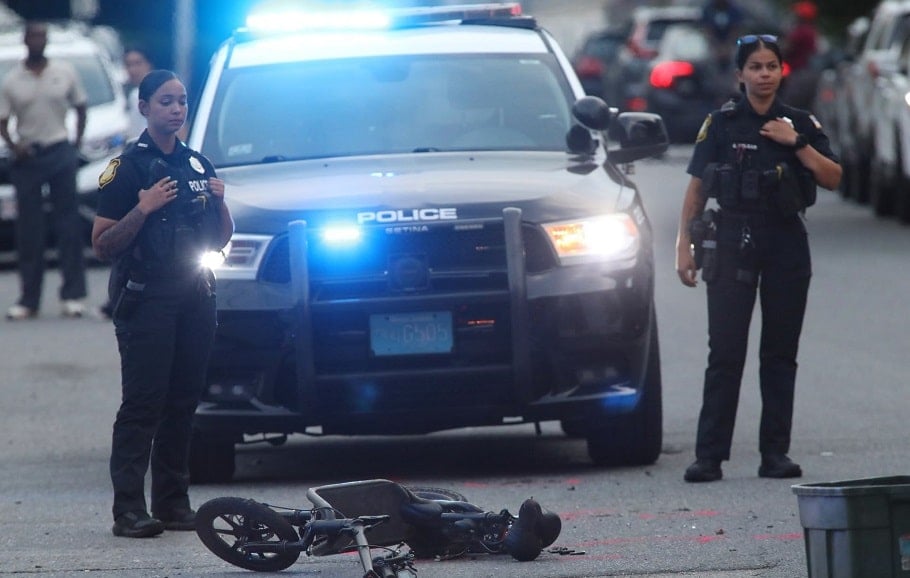

Electric bikes have transformed the way people commute, exercise, and travel through cities. They reduce emissions, ease traffic congestion, and make cycling accessible to a broader range of riders. But as e-bike adoption accelerates, an increasingly important question is emerging:
The questions remains are we doing enough to regulate them?
The answer really depends on who you ask. For some, current laws are failing to keep pace with rapidly evolving technology. For others, new restrictions risk discouraging a cleaner, healthier form of transportation. The debate has become one of the most polarizing issues in transportation policy today.

The reality is technology is moving faster than current laws.
Modern e-bikes have advanced well beyond the capabilities lawmakers envisioned just a few years ago.Across much of the United States, 36 states have adopted legislation similar to the PeopleForBikes Three-Class System, which generally defines an e-bike as a bicycle if:
- Pedal-assist assistance stops at 20 or 28 mph, depending on the class.
- The motor produces no more than 750 watts of power.
The challenge is that today’s marketplace includes machines capable of far greater performance. Some modified or illegally configured e-bikes can reach speeds approaching 60 mph, creating a significant gap between existing regulations and the technology now available.This mismatch raises important questions about whether current definitions remain adequate.
The Rise of “Illegal E-Motos”
One of the biggest concerns isn’t traditional e-bikes at all.
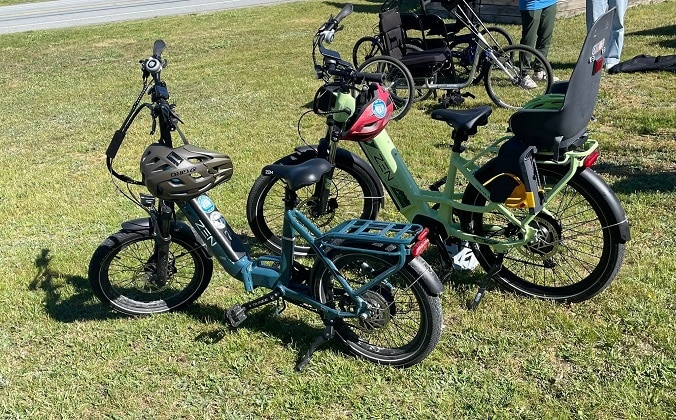
Communities across the country are seeing an increase in high-powered electric motorcycles—often referred to as “e-motos,” such as Sur Ron-style bikes—being ridden on sidewalks, multi-use trails, and bicycle paths.
These vehicles often feature powerful throttles, motorcycle-level acceleration, and speeds well beyond what shared recreational paths were designed to accommodate.
The problem is enforcement.Many park rangers and local law enforcement agencies lack clear legal definitions, testing methods, or authority to distinguish between a compliant low-speed e-bike and an electric motorcycle that should be treated like a motor vehicle.The result is confusion for riders, frustration for pedestrians, and inconsistent enforcement.
A Patchwork of Rules Across America
Rather than a unified national framework, e-bike regulation varies dramatically from state to state—and sometimes from one municipality to the next.Some states are moving aggressively toward stricter oversight.
For example, New Jersey enacted one of the nation’s more restrictive approaches by requiring licensing, registration, and a minimum rider age of 15 for low-speed e-bikes.
Other states are taking a very different approach.
In Florida, the governor vetoed legislation that would have created a uniform statewide speed limit on shared-use paths, instead allowing counties and local governments to establish their own rules.
This patchwork creates uncertainty for riders traveling between jurisdictions and makes public education more difficult.
Massachusetts Takes a Different Approach
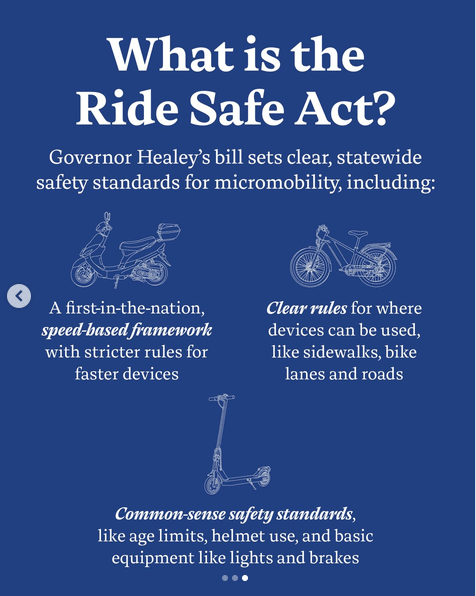
Some policymakers are attempting to modernize regulations without discouraging legitimate e-bike use.Massachusetts recently introduced the Ride Safe Act, widely viewed as one of the first comprehensive legislative efforts aimed at clearly separating high-speed electric vehicles from traditional bicycles on shared-use paths.The legislation responds to growing concerns about injuries, congestion, and the increasing variety of electric mobility devices now sharing the same infrastructure.Supporters believe clearer definitions could help improve both safety and enforcement.
Many transportation advocates argue that regulation alone will never solve the issue.The more fundamental challenge may be infrastructure. Across much of the country, protected bike lanes remain limited or disconnected. Riders often face an uncomfortable choice:
- Ride in fast-moving vehicle traffic.
- Ride on sidewalks where conflicts with pedestrians become more likely.
When safe cycling infrastructure is unavailable, even responsible riders may find themselves operating in spaces that were never intended for bicycles or e-bikes. Many experts believe investing in protected bike networks could reduce conflicts more effectively than additional regulation alone.
The conversation isn’t simply about whether there should be more regulation or less. It’s about finding the right balance.Communities need rules that:
- Clearly distinguish bicycles from high-speed electric motorcycles.
- Give law enforcement practical tools for consistent enforcement.
- Protect pedestrians and cyclists using shared spaces.
- Preserve the environmental and transportation benefits that have made e-bikes so popular.
At the same time, regulations that are too restrictive could discourage people from choosing an efficient, low-emission alternative to driving.
The rapid evolution of e-bike technology has outpaced many existing laws, leaving communities across the country searching for solutions. Some believe stronger regulations are urgently needed. Others argue the real investment should be in safer streets and better cycling infrastructure. Perhaps the answer lies somewhere in between.
What do you think?
Should state and local governments introduce stricter rules for e-bikes? Should high-speed electric motorcycles face entirely different regulations? Or is expanding safe bike infrastructure the most effective long-term solution? We invite you to share your thoughts and join the conversation. Have an opinion? Send us an email: Leo@southcoastspotlight.com