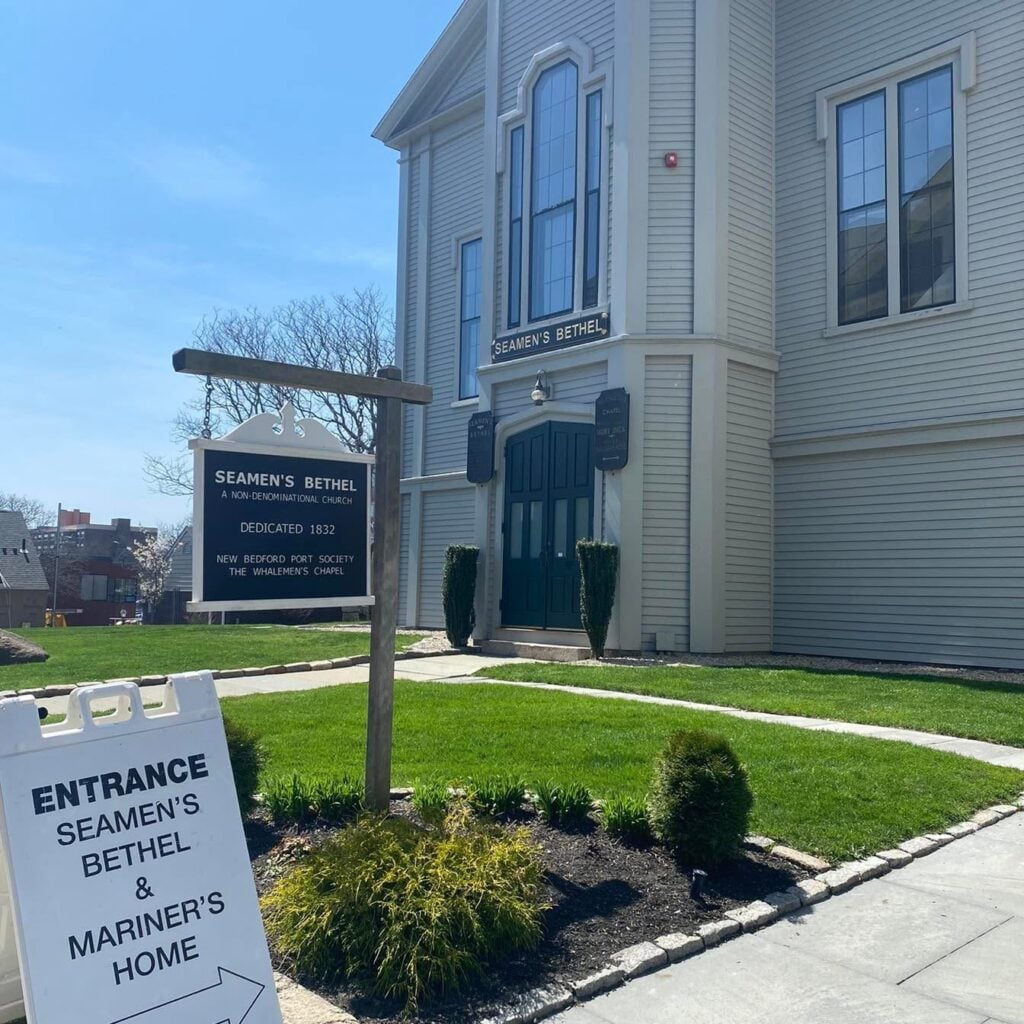

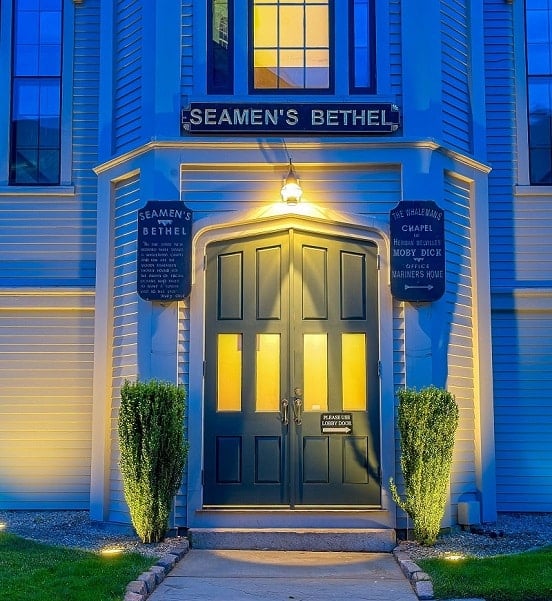

Perched on Johnny Cake Hill in the heart of New Bedford, Massachusetts, Seamen’s Bethel is far more than a picturesque landmark. Built to serve generations of whalers and mariners, this humble chapel has welcomed sailors, inspired one of America’s greatest novels, and preserved the stories of those who never returned from the sea.
The chapel was established on May 2, 1832, by the New Bedford Port Society as a place where whalers could gather for prayer before embarking on dangerous voyages. At a time when many sailors spent their final hours ashore in bars and dance halls, prominent local citizens envisioned a peaceful sanctuary that offered spiritual comfort and guidance before months—or even years—at sea.
Like many historic buildings, Seamen’s Bethel has endured its share of hardship. A fire damaged the chapel in 1866, but it was repaired soon afterward, allowing it to continue serving New Bedford’s maritime community.

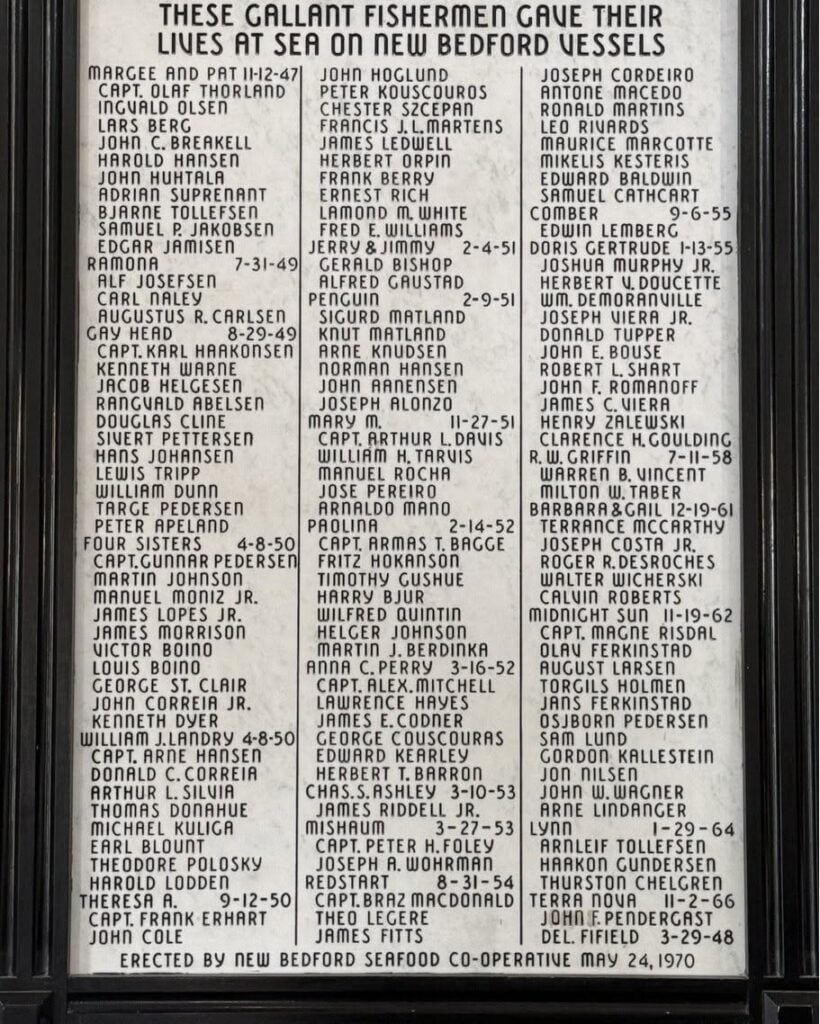
Inside, visitors are greeted by rows of memorial cenotaphs lining the walls. These stone monuments honor local whalers and fishermen who were lost at sea, many of whom were never recovered. Together, they create one of the nation’s most moving tributes to the risks and sacrifices of life on the ocean.
The chapel’s literary fame began in 1841 when a young Herman Melville visited before signing on for his own whaling voyage. His experience at Seamen’s Bethel later became immortalized in Moby-Dick, where it appears as the unforgettable “Whaleman’s Chapel.” Another notable figure connected to the chapel is Civil War soldier and journalist James Henry Gooding, who was married here in 1862.
One of the chapel’s most recognizable features—the dramatic ship-prow pulpit—actually has a surprising history. The original pulpit was a traditional New England box design. After the 1956 film adaptation of Moby Dick featured a striking pulpit shaped like the bow of a ship, visitors began arriving in New Bedford expecting to see the same design. To meet those expectations, the New Bedford Port Society installed a ship-prow pulpit on the chapel’s upper level in 1961, blending Hollywood influence with local history.
Today, Seamen’s Bethel remains both a place of worship and a beloved historic attraction. Since becoming part of the New Bedford Whaling National Historical Park in 1996, the chapel has welcomed visitors from around the world who come to admire its architecture, reflect in quiet prayer, and experience the setting that inspired one of literature’s greatest sea stories. Located at 15 Johnny Cake Hill, Seamen’s Bethel continues to connect travelers with New Bedford’s rich maritime heritage nearly two centuries after its founding.