
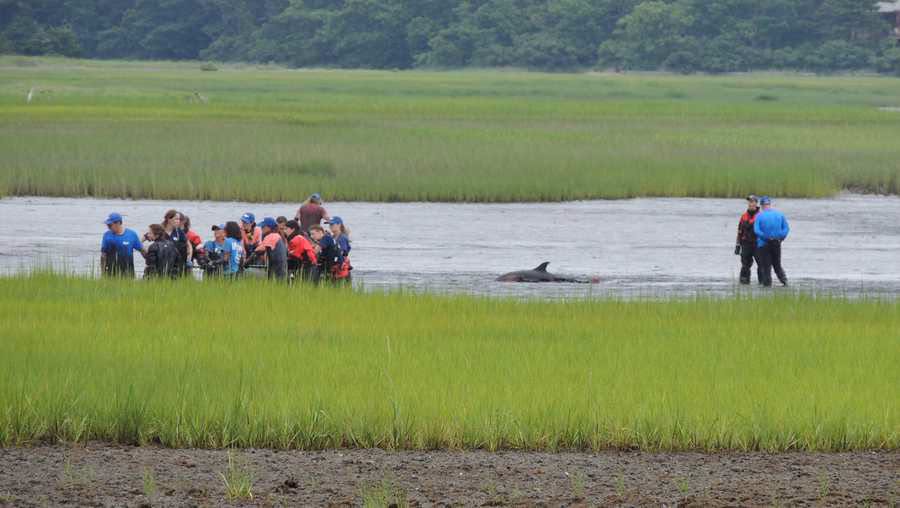

The International Fund for Animal Welfare (IFAW) responded Monday to the largest known bottlenose dolphin mass stranding ever recorded in Massachusetts after 28 to 30 dolphins became stranded at First Encounter Beach in Eastham.
Cape Cod’s distinctive coastline—particularly the curved “crook” around Wellfleet and Eastham—is recognized as a global hotspot for mass strandings. Its dramatic tidal swings and expansive, shallow mudflats can disorient dolphins, making it difficult for them to navigate back to deeper water.
As the tide returned, many of the dolphins refloated naturally, but an estimated five to six died before rescue teams could reach them. IFAW urged the public not to intervene, warning that stranded dolphins can be severely stressed or injured and “should never be pushed or dragged back into the water.”

Rescue crews later used IFAW vessels to guide approximately 50 dolphins safely south and out of Wellfleet Harbor, while teams remained on site to monitor the surviving animals ahead of the evening’s low tide.
Although bottlenose dolphins typically inhabit offshore waters, IFAW says the species has been appearing closer to Cape Cod’s coastline with increasing frequency in recent years, underscoring the need for continued monitoring in one of the world’s most challenging environments for marine mammals.