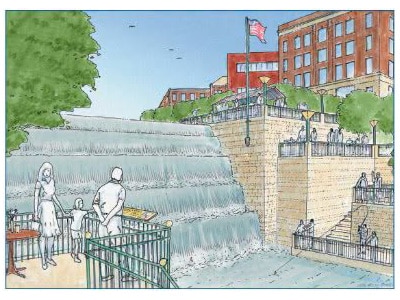

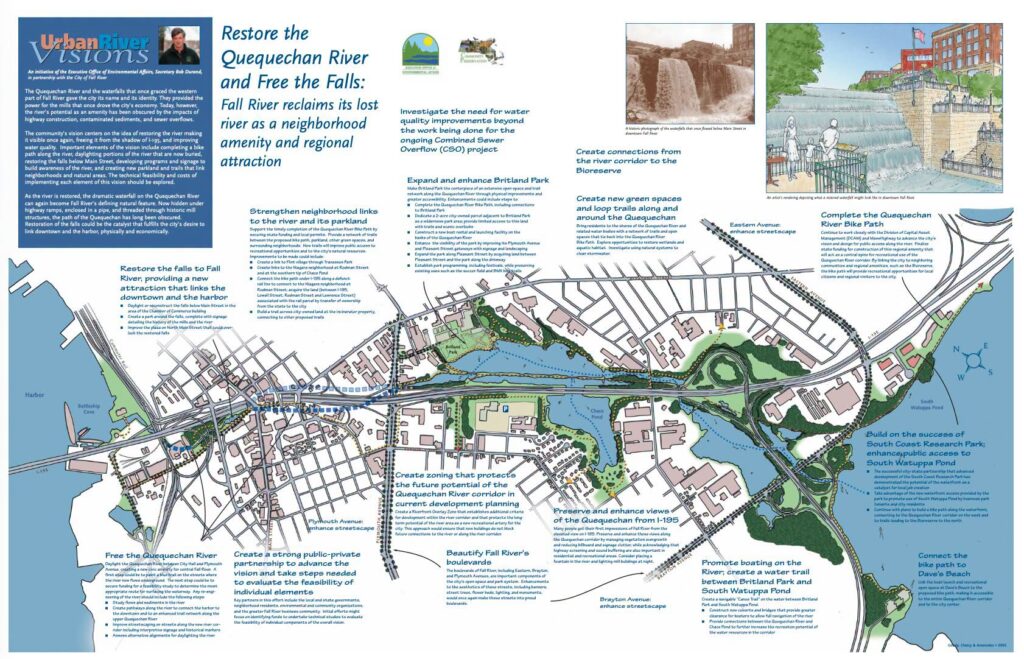
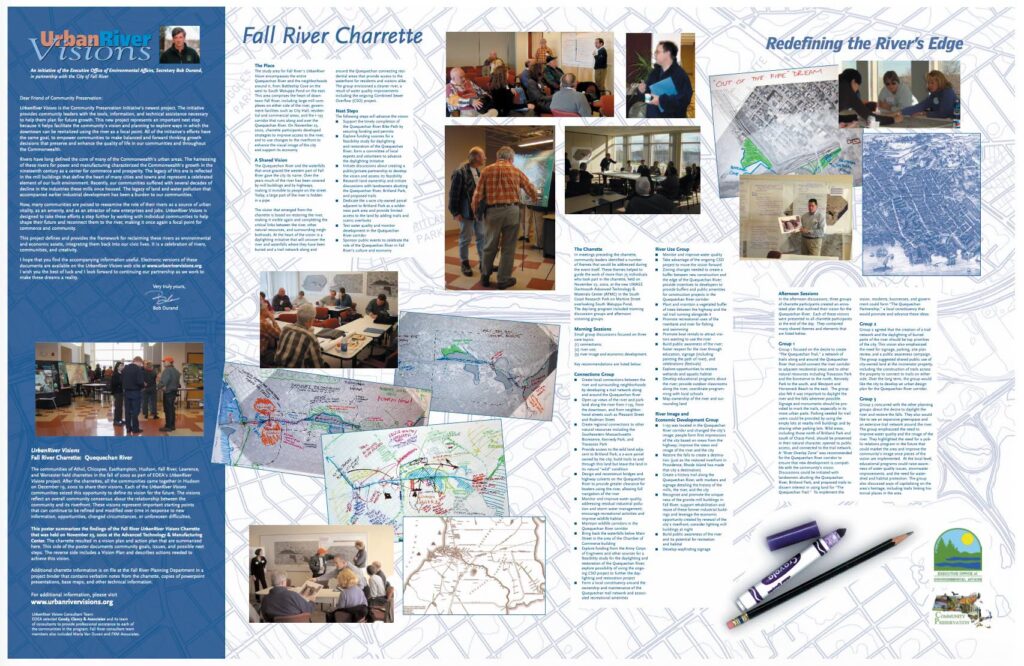
In 2002, the State of Massachusetts led visioning sessions to free the falls of Fall River and daylight the Quequechan. To remedy a multigenerational mistake: bulldozing our namesake for a highway that destroyed the heart of our city.
Al Lima and his group Green Futures were at the center of those sessions, and they kept this vision alive for the next couple of decades through advocacy, planning, and community engagement. The Al Lima Quequechan Rail Trail, named in honor of him, was only a part of this vision. Unfortunately Al Lima passed in 2022, advocating for this vision until the very end. Now that he’s gone, those efforts have largely slowed.
To me, freeing the falls should be Fall River’s defining civic mission. Connecting our waterways through green spaces and trails, would be to realize the advantages Fall River has. It would create remarkable public spaces, strengthen the city’s economy through tourism, and dramatically improve quality of life for residents.

But its greatest significance is symbolic. If we can undo that mistake, if we can restore our namesake after generations, then it becomes proof that Fall River is capable of rewriting its future. It would say that no challenge is too large, no mistake beyond repair, and no chapter of our history beyond redemption. Things fell apart, we made mistakes, but we can choose our narrative.
Nathaniel Roberts is a Fall River resident, photographer, and co-creator of the Facebook Group We’ll Try Fall River. He is also the co-creator of the FR NB Artist Collaborative, a group whose mission is to connect creatives from Fall River & New Bedford.