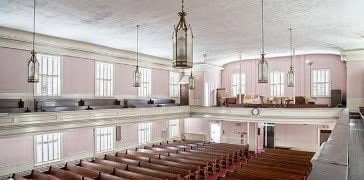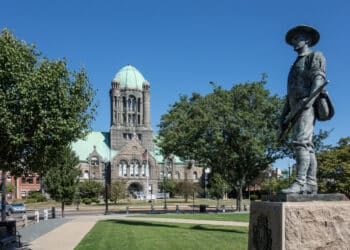



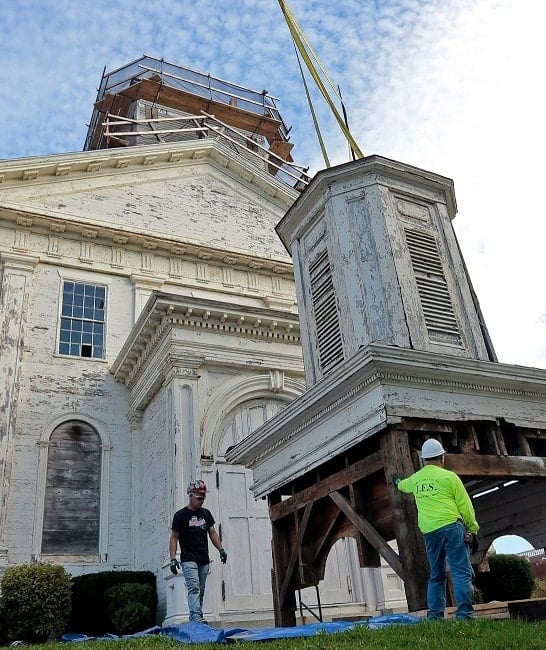
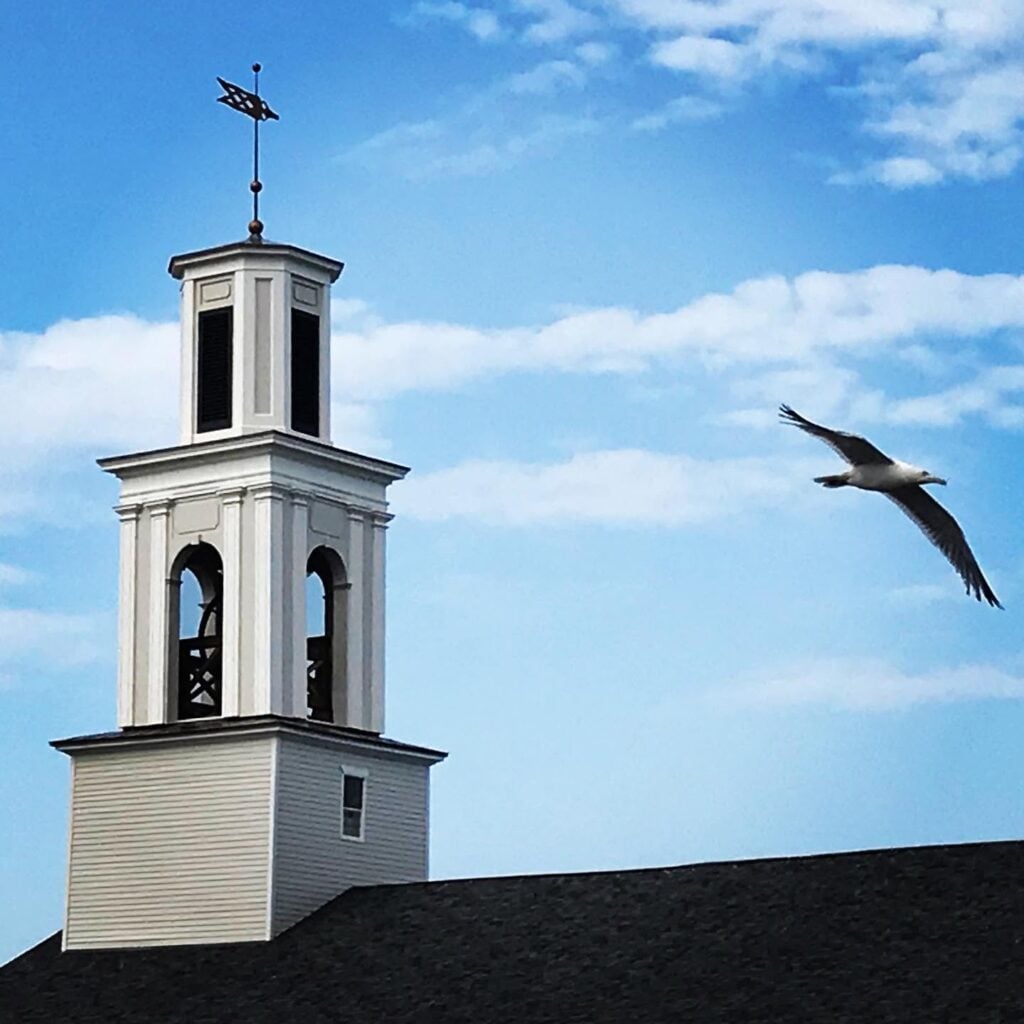
Rising above downtown New Bedford, the First Baptist Church has long been one of the city’s most recognizable landmarks. Dedicated in 1829, the Greek Revival building features a distinctive three-stage wooden steeple that appears on New Bedford’s official seal. During the city’s whaling era, the tower also served as a familiar navigational landmark for ships returning to port.
But the church’s most unusual place in American history came during the Civil War.
The Meeting That Changed the Way America Meets
In 1863, concern over New Bedford’s harbor defenses led to a community meeting at First Baptist Church. Lieutenant Henry Martyn Robert, a U.S. Army engineer, was asked to preside.
What followed was chaos. Participants shouted, argued, and disagreed over how the meeting should be conducted. There was no single, commonly accepted system of parliamentary procedure to guide the assembly.
For Robert, the experience was an education. Frustrated by the disorder, he resolved to study parliamentary law and develop a practical set of rules that could help communities and organizations conduct meetings fairly and efficiently.
His work eventually produced Robert’s Rules of Order.
From New Bedford to the Nation
In 1876, Robert published his first manual, Pocket Manual of Rules of Order for Deliberative Assemblies. It provided a standardized process for making motions, debating proposals, offering amendments, and voting.
More importantly, Robert’s system sought to balance majority rule with the rights of the minority. The goal was not to eliminate disagreement, but to give disagreement an orderly framework.
The rules quickly spread beyond New Bedford. Churches, civic organizations, clubs, school boards, nonprofits, political groups, and municipal bodies adopted them as a common language for conducting business.
The influence of that 1863 meeting therefore extended far beyond the walls of First Baptist Church.
A Landmark With a Lasting Legacy
The church itself has survived dramatic changes. New Bedford’s whaling era ended, its waterfront was transformed, and generations passed beneath the steeple. Today, the restored building operates as the Steeple Playhouse, a performing arts venue.
Yet the building remains connected to an important chapter in American civic history. Thanks to the efforts of WHALE the church and steeple have been restored, here is some more history of the building: https://waterfrontleague.org/past-projects/first-baptist-church-2/
The story of First Baptist Church and Robert’s Rules begins with a disorderly meeting and ends with a system used by organizations across the country. Robert’s great insight was that people with competing opinions need more than a desire to be heard—they need agreed-upon rules that allow everyone to participate while giving the group a fair way to reach a decision.
The ships that once looked to the First Baptist steeple for guidance are long gone. But the lesson born beneath that same tower remains:
Democracy depends not only on having a voice, but on having a fair way for all voices to be heard.