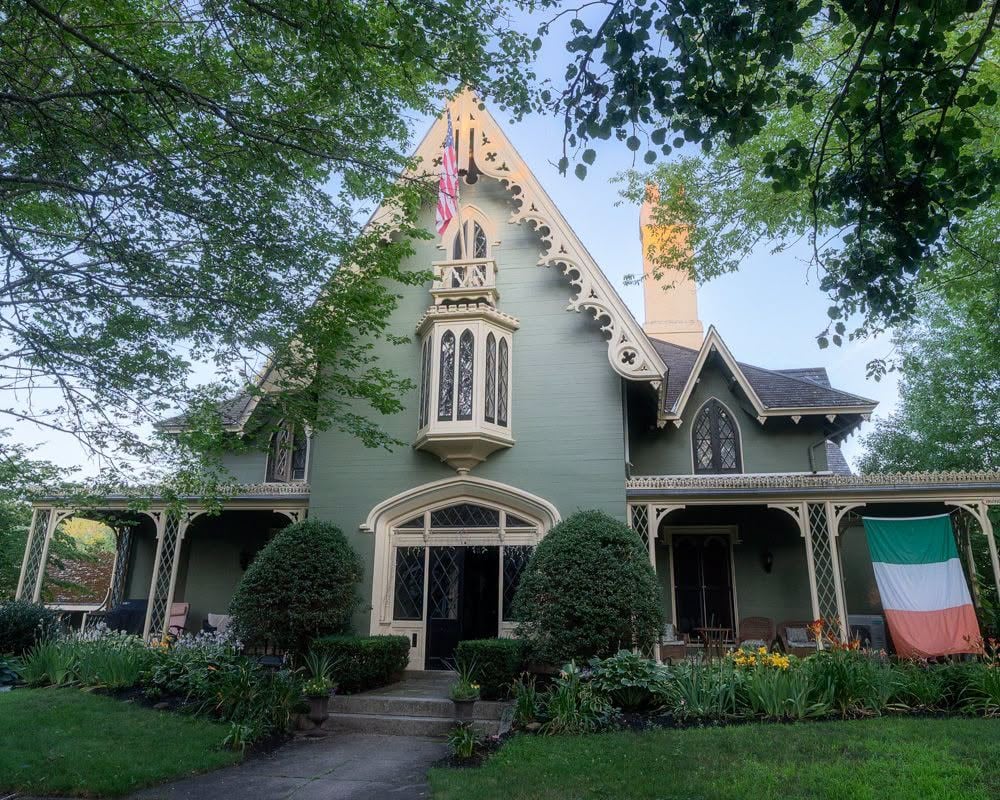


I was inspired by another gorgeous photo from Singing With Light Photography to put this together. (It’s the featured photo)
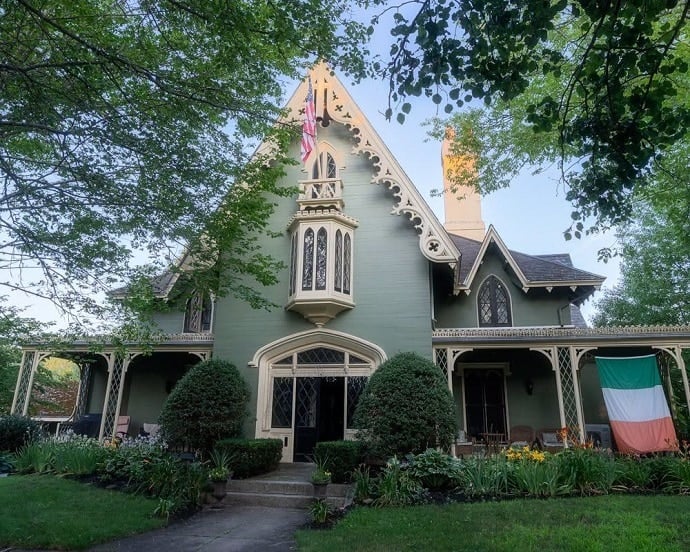
Have you ever noticed the charming Gothic-style cottage on Irving Street? The William J. Rotch Gothic Cottage is one of New Bedford’s most distinctive historic homes, with a story that connects beautiful architecture, a prominent local family, and the city’s whaling legacy.
Built in 1845, the cottage was designed by renowned architect Alexander Jackson Davis for William J. Rotch, whose family helped make New Bedford one of the world’s leading whaling ports. The home was a gift from his grandfather, William Rotch Jr., whose success in the whaling industry played an important role in the city’s growth and prosperity.

What makes this home especially remarkable is its design. With its steep gables, decorative hand-carved trim, Gothic windows, and wood-shingled roof, the cottage is a wonderful example of the Gothic Revival style that was popular in the mid-19th century. It’s also one of only a handful of Alexander Jackson Davis cottages still standing today, making it an important piece of American architectural history.
The home’s reputation extends far beyond New Bedford. In 1850, it was featured in Davis’s influential book, The Architecture of Country Houses, introducing readers across the country to its innovative design and helping establish it as an iconic example of the Gothic cottage style.
Although the cottage was moved a short distance on its property in 1908, it has remained part of the neighborhood for more than 180 years. While the surrounding landscape has changed from open estate grounds to a residential neighborhood, the home continues to capture the imagination of everyone who passes by.
In 2006, the William J. Rotch Gothic Cottage was recognized as a National Historic Landmark and listed on the National Register of Historic Places—an honor that celebrates both its architectural significance and its connection to New Bedford’s remarkable past.
Next time you’re in the neighborhood, take a moment to admire this local landmark. It’s more than just a beautiful home—it’s a lasting reminder of the people, craftsmanship, and history that helped shape our community.