



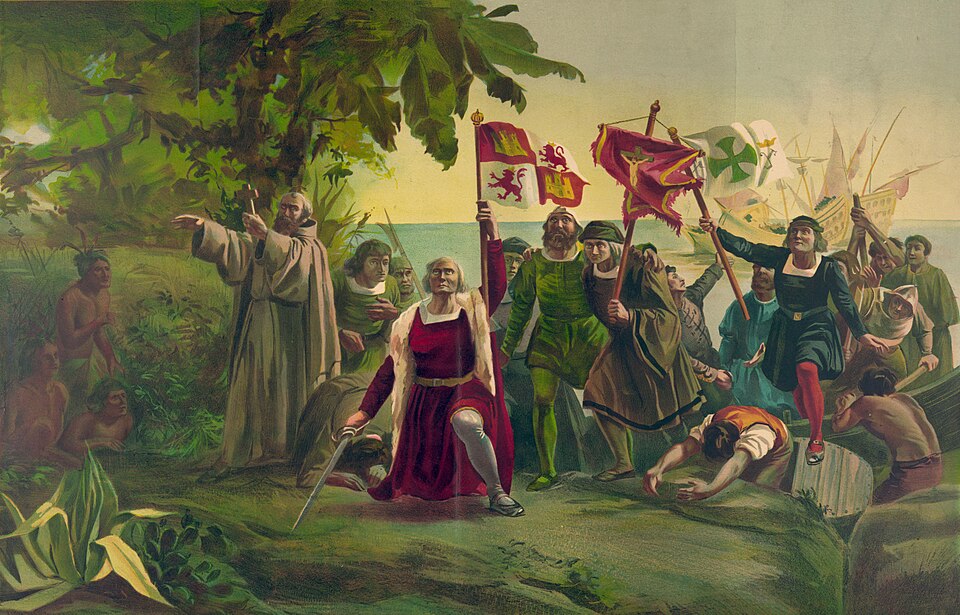
History is rarely a simple tale of heroes and villains; more often, it is a complex tapestry woven from myth, political survival, and inconvenient truths. Few dates on the American calendar capture this tension quite like the second Monday in October. Long observed as a commemoration of Christopher Columbus’s 1492 landfall, the holiday has transformed into one of the nation’s most fiercely debated cultural flashpoints.
To understand why this commemoration sparks such intense friction, we have to look past the elementary school mythology and examine both the dark realities of the colonial era and the surprising political origins of the holiday itself.
The Anatomy of a Myth: History Versus Reality
For generations, the narrative taught in classrooms was straightforward: a brave explorer crossed the Atlantic and “discovered” a New World. Modern historical scrutiny, however, has dismantled this legend piece by piece.
- The Pre-Existing World: Indigenous peoples had inhabited and thrived across the Americas for millennia before 1492. Furthermore, historical records confirm that Norse explorers, led by Leif Erikson, reached North America nearly 500 years earlier.
- Geographic Misconceptions: Columbus himself never actually set foot on the mainland of the modern United States. His four voyages concentrated on Caribbean islands—such as the Bahamas, Cuba, and Hispaniola—alongside parts of Central and South America.
- The Human Cost: The most sobering revisions come from historical documentation, including Columbus’s own logs. They detail the systematic enslavement, torture, and forced labor inflicted upon the native Taino people, where failure to meet rigid gold quotas brought severe punishment or death.
- Catastrophic Devastation: The collision of worlds introduced Old World epidemics like smallpox and measles to populations with zero immunity. Combined with brutal warfare and displacement, these diseases triggered a population collapse of staggering proportions.
A Holiday Born of Survival, Not Conquest
Given this heavy ledger, why did the day become a federal holiday in the first place? The answer reveals that the celebration was originally less about honoring Columbus and more about protecting a marginalized group of immigrants.
In the late 19th and early 20th centuries, Italian immigrants faced profound prejudice, discrimination, and systemic violence across the United States—culminating in events like the horrific 1891 mass lynching in New Orleans. As a gesture to help Italian Americans assimilate and feel valued, President Benjamin Harrison proclaimed a one-time national celebration in 1892.
Decades later, lobbying from the Catholic fraternal organization the Knights of Columbus persuaded President Franklin D. Roosevelt to establish it as a federal holiday in 1937, cementing Italian-American contribution and citizenship into the national calendar.
A Nation in Transition
Today, the holiday stands at a cultural crossroads. As society grapples with the duality of its past—balancing the vital recognition of immigrant perseverance against the tragic realities of Indigenous suffering—the calendar is shifting.
Dozens of states and hundreds of municipalities have redefined the day, choosing instead to celebrate Indigenous Peoples’ Day
As of 2026, at least 17 states and Washington, D.C. officially recognize [Indigenous Peoples’ Day] (or an equivalent variant) on the second Monday of October. Because it is handled at the state and local levels rather than being a single unified federal mandate, the exact format of how it is celebrated varies significantly.
. This evolution doesn’t erase history; rather, it broadens our perspective, moving the spotlight from a flawed myth of “discovery” to the enduring resilience, culture, and history of Native Americans. Ultimately, confronting these uncomfortable truths doesn’t diminish our national story—it makes it honest.
How do you feel your local community balances honoring immigrant heritage with acknowledging Indigenous history on this day?