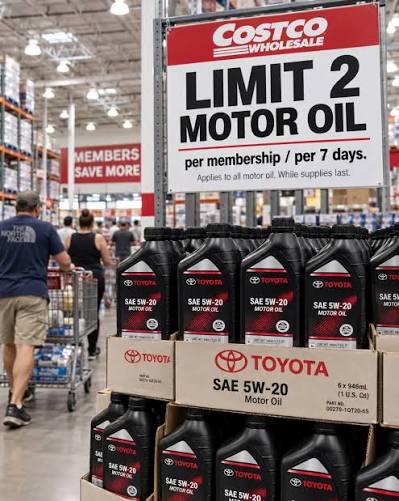


If you rely on Costco for affordable DIY garage projects, you are about to feel a massive pinch at the checkout counter. Costco has implemented strict purchase rationing and nearly doubled its prices on motor oil as crude oil prices break past $100 per barrel. It won’t be long before other retailers follow suit.
A toxic cocktail of geopolitical instability in the Middle East and shifting refinery priorities has trickled down to the retail floor, catching everyday drivers in the crossfire.
The New Reality at the Pump Block: Strict Caps and Steep Fees
Shoppers heading down the automotive aisle will be greeted by unexpected limits and stark price tags. The policy changes focus primarily on Costco’s dominant house label:

- Kirkland Signature Full-Synthetic Motor Oil (10-quart case): Once a staple bargain at $30 with unrestricted purchase freedom, this case now commands a hefty $57.99. Furthermore, shoppers are legally or contractually locked out from hoarding; purchases are strictly limited to two cases per customer per week.
- Mobil 1 Full-Synthetic Motor Oil: Name-brand options are experiencing matching constraints, with retail prices hovering around $44 and sales tightly restricted to a maximum of five cases per membership.
Behind the Shortage: Why Motor Oil is Vanishing
While minor price corrections are expected in volatile energy markets, a near-100% price spike is virtually unheard of. The rationing is a direct consequence of systemic choke points hitting the petroleum pipeline:
1. Refinery Economics & Profit Chasing
At its core, the consumer motor oil shortage comes down to a battle over what makes the most money for oil companies. Because motor oil is refined from the exact same crude barrels used to produce consumer fuels, refineries are pivoting. With global diesel prices shattering historic records to hit a staggering $6.06 per gallon, oil corporations are aggressively prioritizing gasoline and diesel production over the low-margin lubricants sitting on Costco shelves.
2. Choke Points and Middle East Shipping Turmoil
The logistical backdrop is similarly grim. Ongoing conflicts involving the U.S., Israel, and Iran have completely destabilized key transit zones.
- The East-West Pipeline: Recent satellite data showing smoke damage near Saudi Arabia’s critical East-West Pipeline has triggered alarm bells, as this route serves as the kingdom’s primary safety valve to bypass the contested Strait of Hormuz.
- Bab el-Mandeb Strait: Simultaneously, Iran-aligned Houthi forces have successfully reached Perim Island in the Bab el-Mandeb Strait. Disrupting this lesser-known but highly vital shipping lane threatens to send compounding shockwaves throughout the global synthetic supply chain.
3. Sophisticated Chemistry and Corporate Fees
Modern engines are shrinking in size but pushing massive amounts of boost, meaning the chemical engineering behind synthetic oil is far more complex and rigorously tested than it used to be. Coupled with mandatory, expensive licensing fees that automakers force fluid manufacturers to pay to stamp explicit brand approval on the packaging, cheap oil has become an impossibility.
What This Means For Your Next Oil Change
If you manage a heavy commercial fleet, these strict buying caps will actively disrupt your operational flow. For the average commuter, however, the direct impact is minor. A normal sedan requires only 4 to 5 quarts of fresh oil every 5,000 miles, meaning Costco’s weekly two-case allocation provides more than enough fluid to maintain domestic vehicles.
The real casualty here is the financial benefit of the classic weekend DIY project. With retail oil prices doubling, the financial margin between purchasing bulk oil to change it in your own driveway versus simply handing the keys to an independent local mechanic has narrowed significantly. Drivers looking for temporary relief may need to cross-shop alternative wholesale clubs to find unrationed back-stock before the broader retail market corrects.
Are other big retailers next? Its very likely.