



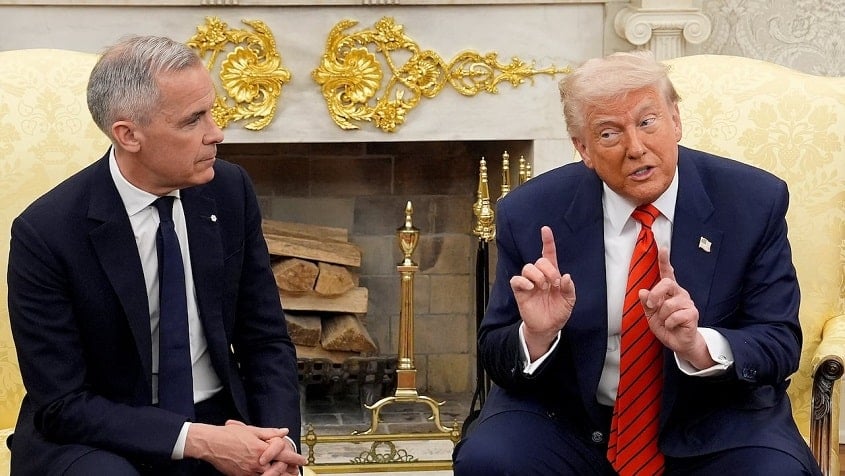
Canadian Prime Minister Mark Carney said Saturday in Ottawa that Canada will announce new retaliatory tariffs in the coming days, with the measures taking effect the Tuesday after Labor Day. The dollar-for-dollar response would target American steel, dairy, appliances, agricultural equipment, pulp and paper, and electronics.
Carney said Canada had offered a path toward reducing tensions, including dropping its remaining retaliatory tariffs on steel, aluminum, and automobiles if the United States substantially lowered its own tariffs. Canada was also prepared to encourage provinces to restore sales of U.S. alcohol.
But according to Carney, the Trump administration demanded too much while offering too little in return. “They asked too much and offered too little,” he said.
Trump’s tariff strategy isn’t just bad for Canada—it is bad for Americans. Instead of strengthening the United States through smart trade and diplomacy, his administration is using economic pressure against one of America’s closest allies, putting American workers, consumers, farmers, and businesses at risk of higher costs and lost markets.
The new U.S. tariffs are being sold as putting America first, but a policy that makes American goods more expensive, strains relationships with longtime allies, and invites retaliation is not what putting America first looks like.
A strong America doesn’t need to bully its friends to prove its strength. It leads. It negotiates. It builds alliances. And it puts American families and workers ahead of political theater.
Carney called the tariffs an attempt to “hurt us and divide us.” That should be a warning to Americans as well. The United States is strongest when it works with its allies—not when the president turns friends into enemies for political gain.