

Flock Safety’s network of automated license plate reader (ALPR) cameras has expanded at a remarkable pace, raising growing questions about privacy, surveillance, and public accountability. But one question is often overlooked:
Who is paying for this massive surveillance network, and where is the money coming from?
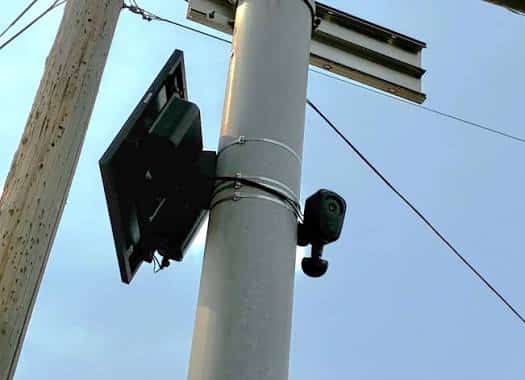
Across the United States, Flock Safety has installed an estimated 90,000 to more than 100,000 ALPR cameras. Independent crowdsourced mapping projects, including DeFlock, have identified nearly 96,000 individual Flock camera locations nationwide.

The Scope of Flock’s Network
- Operating in 49 states
- Installed in more than 5,000 cities and neighborhoods
- Processing over 20 billion vehicle scans every month
These cameras don’t just capture license plates. They record:
- Vehicle make and model
- Color
- License plate number
- Distinguishing features such as bumper stickers, roof racks, decals, and other identifying characteristics
The information can then be searched and shared through interconnected law enforcement databases used by thousands of police agencies across the country.
Massachusetts: A Growing Surveillance Network
Massachusetts now has more than 350 Flock Safety cameras deployed through over 80 local police departments, with the number continuing to change as municipalities approve, expand, or cancel contracts.
Examples include:
- Lowell: 39 cameras
- Canton: 8 cameras
- Boston: Planned rollout of 75 cameras
Communities Are Pushing Back
Not every community has embraced the technology.
Several Massachusetts municipalities—including Cambridge, Natick, and Watertown—have rejected or canceled Flock contracts after residents raised concerns about:
- Privacy
- Long-term data retention
- Nationwide information sharing
- Government surveillance
- Lack of transparency and oversight
Advocacy organizations such as Eyes Off MA continue tracking camera deployments and encouraging public discussion about the expansion of automated surveillance.
The Question Taxpayers Deserve Answered
As the network grows, many residents are asking:
- Who is funding Flock Safety’s rapid expansion?
- How much taxpayer money is being spent on these systems?
- Are federal grants, state grants, local budgets, or private organizations paying for the cameras?
- Who decides where they are installed, and what oversight exists?
- Who has access to the data, and how long is it retained?
While many Flock deployments are financed through local police budgets, others are funded by federal public safety grants, state grants, neighborhood associations, business improvement districts, homeowners’ associations, and private partnerships. Because funding sources vary from community to community, greater transparency can help residents understand how surveillance systems are being purchased and maintained.
As Flock Safety continues building one of the nation’s largest vehicle-tracking networks, the debate is shifting beyond technology itself to fundamental questions about privacy, accountability, public spending, and who ultimately controls the collection and sharing of Americans’ travel data.