

Many moons ago my career path was going to be that of a History teacher, but life is funny sometimes and takes you in different directions. My love of history is still present however and sometimes an article or blog catches my eye. Here is a fascinating tale of President George Washington’s first New England visit as President of the United States.
His presidential journey through New England unfolded in the autumn of 1789, scarcely six months after George Washington took the oath of office as the nation’s first president. His itinerary carried him through Connecticut, Massachusetts, and New Hampshire—the only New England states then admitted to the young Union. Throughout the tour, Washington deliberately chose to lodge in public taverns rather than the private homes of prominent citizens, reinforcing his image as a republican leader who stood among the people rather than above them.
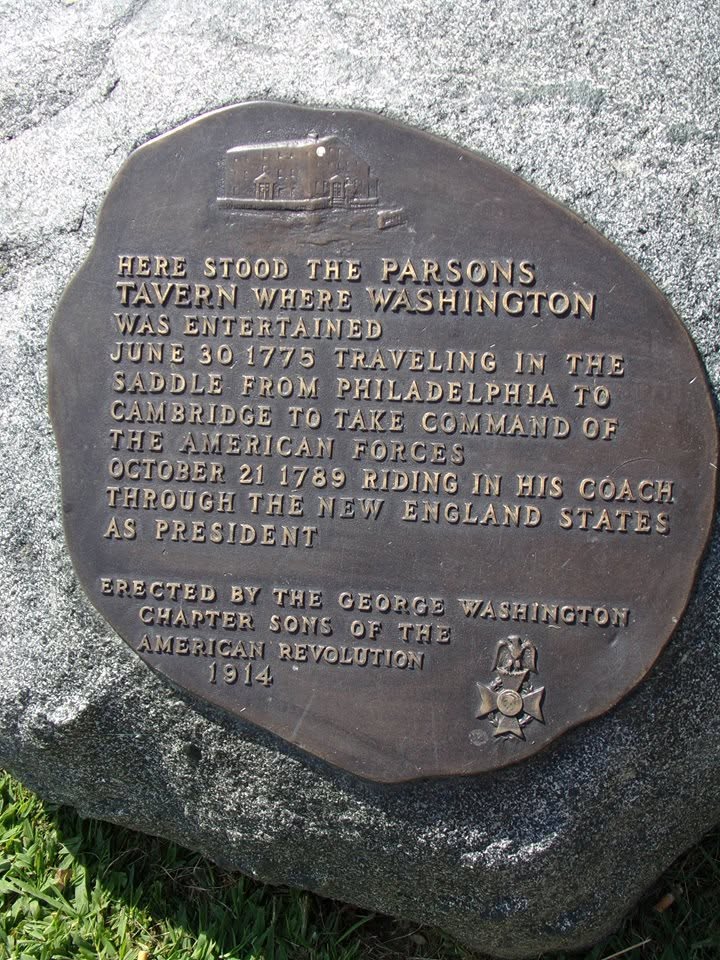
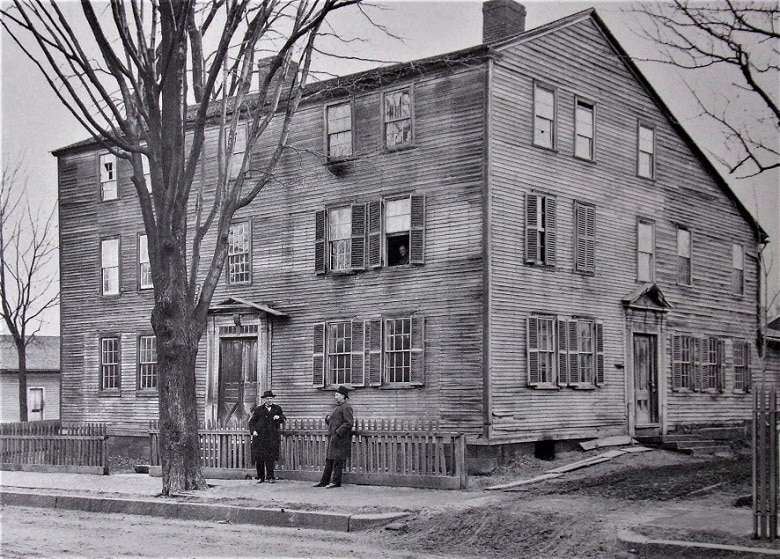
Among the notable stops on his journey was Springfield, Massachusetts, where Washington spent the night of October 21, 1789, at Parsons Tavern. In his diary, he offered the succinct but favorable assessment that it was “a good House.” The tavern stood on what is now Court Square, near the corner of Main and Elm Streets. Washington was no stranger to the establishment, having lodged there fourteen years earlier in 1775 while traveling to Cambridge to assume command of the Continental Army at the outset of the American Revolution.

Parsons Tavern would continue to welcome presidents in the decades that followed. John Adams stopped there on at least two occasions—once before ascending to the presidency and again while serving in the nation’s highest office. In 1817, President James Monroe also visited the tavern during his celebrated tour of New England, further cementing its place in the region’s presidential history.
Around 1820, the venerable tavern was moved a short distance northwest to Court Street, where it began a new chapter as an apartment building. It remained a familiar Springfield landmark throughout the nineteenth century and appears in photographs from the late 1800s. Despite its historical significance, the building met an unfortunate end in 1897. Before its demolition, the owner offered it free to anyone willing to relocate and preserve it, but no suitable benefactor came forward. Today, the site where Washington once rested has been transformed into a parking lot, situated just east of Interstate 91—a quiet reminder of a landmark lost to time.