



Here is an opinion piece by Dartmouth Select Board member Nathan Silva:
I encourage all Dartmouth residents to pay close attention to Question 7 on the ballot this November.
Many residents are already frustrated by the number of Chapter 40B developments coming before the Town and by the limited control Dartmouth has over their location, density, and overall impact.
Question 7 is not another Chapter 40B law, but it raises a similar concern: the state overriding zoning decisions that have traditionally been made at the local level.
Question 7 would prevent communities from requiring more than 5,000 square feet of land and 50 feet of frontage for a single-family home in residential areas served by public water and sewer—even where Dartmouth’s current zoning requires substantially larger lots.
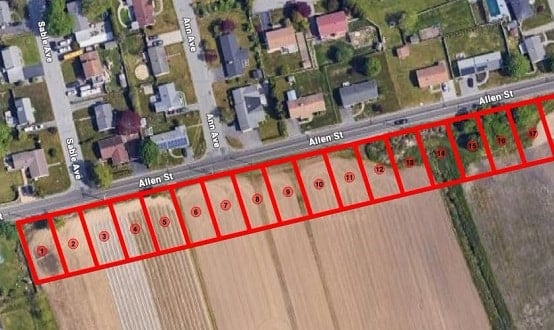
I created the accompanying image to illustrate what that could potentially mean here in Dartmouth. It shows a hypothetical division of a portion of a property many residents are familiar with along Allen Street into approximately 50-by-100-foot lots.
To be clear, this is not an actual development proposal. I am not suggesting that the property owner or any developer is planning such a project. It is simply a conceptual illustration of the density that 5,000-square-foot lots could potentially allow on land that is currently open space—roughly 27 lots in this example.
Supporters of Question 7 argue that smaller lots could increase the housing supply, reduce land costs, create more opportunities for starter homes, and provide additional options for seniors looking to downsize. Those are legitimate goals.
But Dartmouth is already confronting the cumulative effects of development on our roads, schools, water supply, and sewer infrastructure. Question 7 could create substantially more development potential while simultaneously limiting the Town’s ability to determine where that density is appropriate.
Residents who are concerned about Chapter 40B should understand what is at stake. While Question 7 and Chapter 40B are different laws, both raise an important question about how much control Dartmouth should retain over its own land-use decisions. Question 7 would represent another significant transfer of zoning authority from Dartmouth to the state.
Massachusetts needs more housing. But housing growth should be guided by thoughtful, transparent local planning that takes infrastructure, neighborhood impacts, and community character into account—not by a one-size-fits-all statewide mandate.
The question Dartmouth residents should consider is not whether we need more housing. It is who should have the authority to decide where and how that housing is built.