


Which Everyday Goods Cost More Under Trump Vs. Biden
When voters look at the economy, the conversation rarely stays abstract—it usually comes down to what’s happening in the grocery aisle, at the gas pump, and on utility bills. As the political and economic landscape continues to shift, data tracking platforms like Biden to Trump offer a granular look at how specific consumer prices have evolved across administrations. Its amazing how many folks will cry about egg prices during a bird flue epidemic and post memes about $5 gas but won’t look at the broader picture, long term trends or the average price for year, much less an entire Presidential term. These are real numbers that get updated daily, its easy too look up!
While certain commodities have seen notable relief—such as a dramatic drop in average egg prices—other everyday essentials have trended upward. According to recent data, several key categories are flashing red, indicating higher costs for consumers. Loan rates are crushing homeowner and the real estate industry. Inflation is back too.
At the Grocery Store: Mixed Signals for Shoppers
Food inflation remains one of the most visible indicators of the cost of living. While staples like eggs have experienced a significant downward correction, others are putting more pressure on household budgets:
- Beef: Up 20.1%, averaging $6.79.
- Coffee: Up 28.3%, averaging $9.33.
- Cheese: Up 7.3%, averaging $6.13.
- Rice: Up 10.3%, averaging $1.12.
- Oranges: Up 11.7%, averaging $1.72.
- Soft Drinks: Up 8.3%, averaging $2.27.
For families trying to keep weekly grocery bills manageable, staples like coffee and beef require a larger share of the shopping budget compared to previous baselines.
Energy and Utilities Facing Steep Increases
Beyond the kitchen table, energy costs have seen some of the sharpest upward movements tracked on the index:
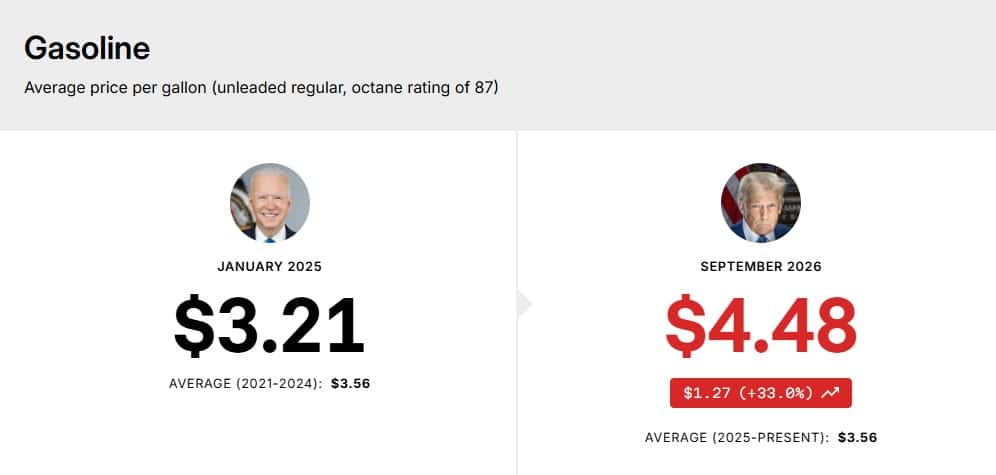
- Gasoline: Up 33.0%, averaging $4.48 per gallon.
- Diesel: Up 54.7%, averaging $6.33 per gallon.
- Electricity: Up 9.1%, sitting at $0.196 per kWh.
Because transportation and energy costs ripple through the entire supply chain, rising fuel and diesel prices often act as a hidden tax on nearly every other physical good transported across the country.
Broader Economic Indicators
The cost-of-living picture is also shaped by macroeconomic factors impacting borrowing and employment:
- Inflation Rate: 3.7% (reflecting a 20.9% increase over prior baselines).
- Interest Rate: 7.3% (up 4.2%), keeping mortgages and loans expensive for everyday buyers.
- Unemployment Rate: 4.2% (up 4.9%).
- Stock Market: 51,910 (showing a strong +17.6% gain).
The Bottom Line
Economics is rarely a monolith. While stock market performance and certain agricultural commodities show positive trends or steep declines from historical highs, the red numbers on items like fuel, coffee, and beef highlight the ongoing financial pressures facing everyday households.
What areas of your budget have you noticed stretching the most lately?