



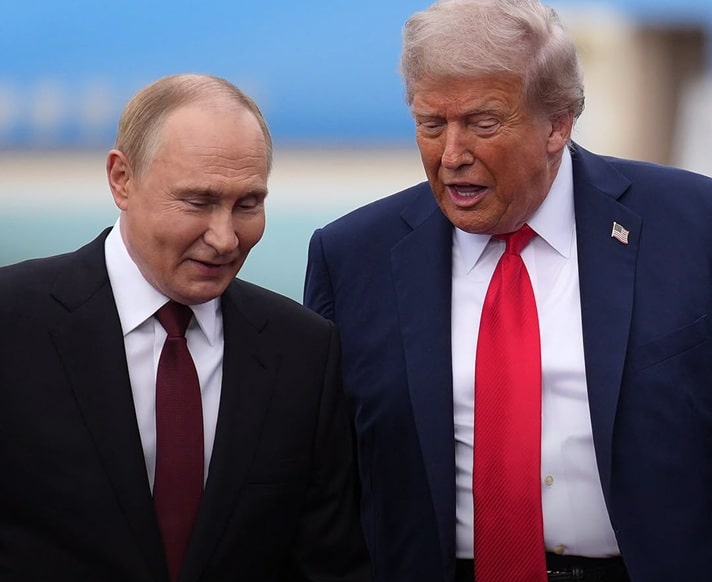
For years, the political playbook of Donald Trump has been anchored by a loud, uncompromising posture of America First nationalism. Yet, when faced with skyrocketing domestic fuel prices—aggravated by his own administration’s military escalations—that tough-guy rhetoric has dissolved into a stunning concession. The announcement of a Treasury-backed general license permitting millions of tons of Russian diesel imports through April 2027 exposes a profound contradiction at the heart of Trump’s foreign and economic policy.
Rather than standing firm against foreign adversaries, the administration has opted to cut a backroom arrangement with Vladimir Putin, handing a crucial geopolitical and economic lifeline to the Kremlin just as tightening midterm pressures demand a quick fix.
A Convenient Reversal on the Kremlin
For an administration that built its brand on economic isolationism and aggressive sanctions enforcement, cutting an explicit energy deal with Moscow is nothing short of breathtaking hypocrisy. Trump rushed to publicly thank Vladimir Putin for agreeing to supply massive amounts of fuel, painting the arrangement as a masterstroke of deal-making.
In reality, it represents a major diplomatic victory for the Russian autocrat. By carving out specific regulatory exemptions through the Treasury’s Office of Foreign Assets Control, the White House has effectively softened its posture toward Moscow when it became politically convenient. Critics are right to point out the double standard: an administration quick to lecture allies and implement sweeping economic punishments has chosen to enrich and legitimize a hostile foreign power to cover up its own policy miscalculations.
Masking Self-Inflicted Domestic Pain
The urgency behind this sudden alignment with Moscow isn’t born of long-term strategic vision; it is a panic response to soaring inflation at the pump. American truckers, farmers, and working families are currently bearing the brunt of record-high fuel costs—costs driven higher by supply shocks and compounded by volatile military adventures abroad.
Instead of addressing the root systemic vulnerabilities of domestic refining or sobering up from reckless geopolitical conflicts, the administration is leaning on foreign imports as a band-aid. Analysts have already noted that the phased rollout of these shipments is too modest and too slow to deliver meaningful relief to everyday consumers before critical political deadlines arrive. It is a desperate political maneuver designed to project control while quietly leaning on a sanctioned adversary to bail out a sagging domestic agenda.
Trump’s Russian diesel deal strips away the illusion of consistency in modern conservative energy politics. When the pressure mounts, ideological purity takes a backseat to political survival, even if it means writing policy exemptions for the Kremlin.
Ultimately, this move teaches us a harsh lesson about hollow political posturing. American energy independence cannot be achieved by cutting deals with foreign dictators whenever domestic policies backfire. Until leadership is willing to trade convenient soundbites for honest, sustainable energy stewardship, voters will continue to pay the price for these geopolitical contradictions.
What message does it send to our international allies when the administration chooses to cut energy deals with Moscow the moment domestic fuel prices tick upward?