

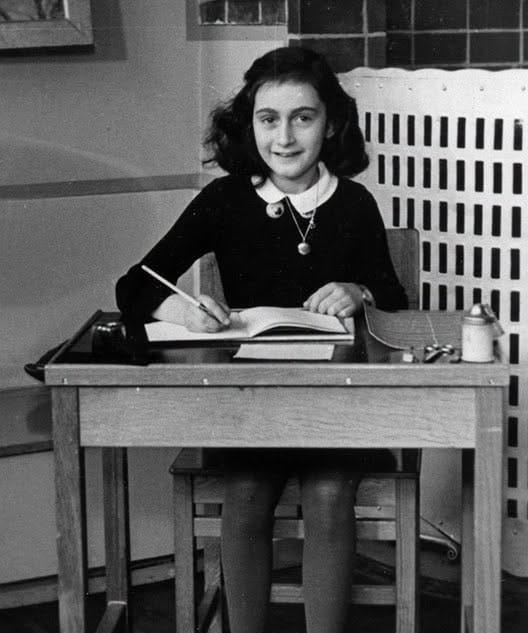

On August 4, 1944, Anne Frank, her family, and the four other people hiding with them in the Secret Annex above her father’s business in Amsterdam were discovered by the Gestapo following an anonymous tip.
The group had spent more than two years in hiding to escape Nazi persecution during World War II. After their arrest, they were sent to the Westerbork transit camp and later deported to Auschwitz. Anne and her sister, Margot, were eventually transferred to the Bergen-Belsen concentration camp, where both died of typhus in early 1945, just weeks before the camp was liberated.
Anne’s father, Otto Frank, was the only member of the group to survive the Holocaust. After the war, he published Anne’s diary, which she had written while in hiding. The Diary of a Young Girl has since become one of the world’s most widely read books, offering a powerful firsthand account of the Holocaust and the resilience of the human spirit.

We remember Anne Frank to honor the millions of lives devastated by the Holocaust, recognize the profound human cost of hatred and prejudice, and preserve the enduring lesson of where intolerance can lead. Through her diary, Anne gave the world a deeply personal and lasting account of one of history’s darkest chapters, ensuring that the voices of those who suffered are never forgotten.