



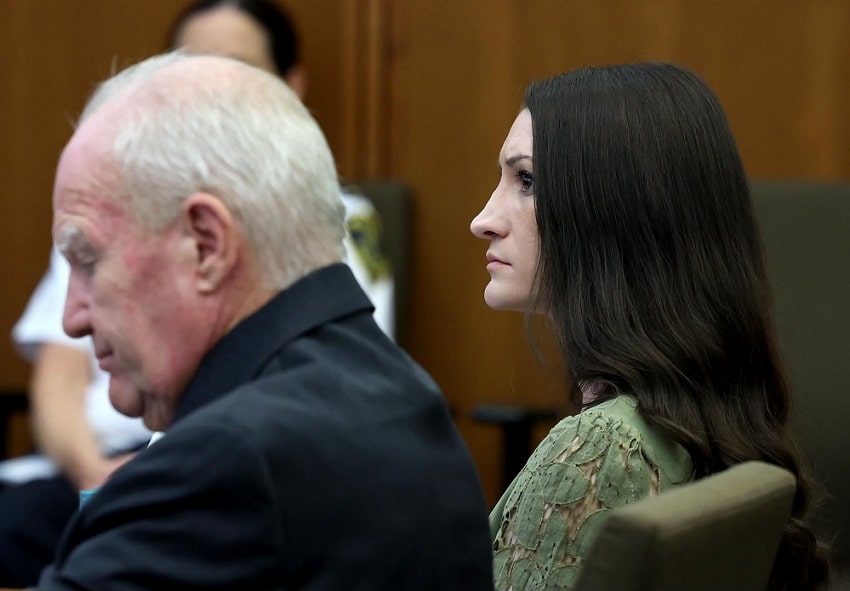
Key takeaways from this week in the Clancy trial thus far:
1. The defense is building a picture of severe, worsening postpartum mental illness.
The testimony is focused heavily on Lindsay Clancy’s mental state in the weeks and months before the deaths. The defense appears to be emphasizing:
- Severe anxiety and depression
- Extreme lack of sleep
- Suicidal thoughts
- Intrusive thoughts she said were new and frightening
- Feelings of hopelessness
- Concerns about becoming dependent on medication
- Repeated efforts to obtain more intensive mental-health treatment
2. Her December 2022 screening was significant.
Latiesha Dukes testified that Clancy scored 23 out of 30 on the Edinburgh postpartum depression screening. That is a very high score and, according to the testimony, was above the threshold requiring further evaluation.
This is potentially important for the defense because it provides contemporaneous evidence—not something developed only after the children’s deaths—that Clancy was experiencing substantial postpartum symptoms.
3. She was actively asking for help.
One particularly important point is that Clancy reportedly contacted Aspire during a weekend when she was experiencing intrusive thoughts about dying. She was referred elsewhere after being told she didn’t meet the criteria for inpatient treatment because she didn’t have a suicide plan.
The defense can use this to argue that she recognized she was deteriorating and repeatedly tried to obtain treatment.
4. Her caregiver message could be powerful evidence.
The message reportedly sent less than two months before the killings is significant because Clancy described:
“intrusive thoughts I never had before”
and said she was:
“feeling completely hopeless”
She also expressed concern about becoming addicted to medications.
That potentially gives the jury a firsthand account of what she was experiencing shortly before the deaths.
5. But the prosecution has an important counterpoint.
Dukes testified that although Clancy exhibited many symptoms of postpartum depression, she did not observe psychosis, mania or paranoia and did not believe Clancy presented a danger to herself or others.
That distinction could become extremely important.
The issue isn’t simply whether Clancy was depressed or suffering postpartum symptoms. The much harder question for the jury is what her mental state was at the time she killed her children and whether it legally excuses or mitigates her conduct.
6. The testimony creates two competing narratives.
The defense narrative is essentially:
She was seriously mentally ill, deteriorating, experiencing frightening intrusive thoughts and suicidal, and repeatedly asking professionals for help.
The prosecution can point to:
Mental illness and postpartum depression do not automatically mean psychosis or that someone is incapable of understanding reality or controlling their actions.
And Dukes’ testimony that she saw no psychosis, mania or paranoia gives the prosecution something important to work with.
The courtroom moment today
The medical examiner’s graphic testimony appears to have been one of the most emotionally difficult moments of the trial. When the details of the children’s deaths were described, Clancy began crying loudly in her wheelchair, and the judge cleared the courtroom.
That moment is difficult to interpret legally. It doesn’t establish what her mental state was when the children died. It does, however, show how emotionally intense the testimony is becoming.
And your question about the jury is an important one: will jurors primarily respond emotionally to the suffering of the children, or to the evidence that their mother was severely mentally ill?
Realistically, they can feel both. Jurors don’t have to choose between compassion for the children and recognition of Clancy’s mental illness. Their ultimate job, however, is to separate those emotions from the legal questions they must decide.
The biggest thing we’re watching:
The most consequential issue emerging from this testimony is not simply “Was Lindsay depressed?” The evidence already strongly supports that she was experiencing serious postpartum symptoms.
The bigger question is:
Did her condition progress into a mental state that legally affected her ability to understand what she was doing or control her behavior at the time of the killings?
That’s where testimony about psychosis, reality testing, intrusive thoughts, medications, sleep deprivation, suicidal ideation and her behavior immediately before and during the killings becomes especially important.
And the fact that a clinician testified she never saw psychosis could become a major point of conflict between the prosecution and defense experts.