

Johnson House Reflects New Bedford’s Role in the Fight Against Slavery
A historic house on Seventh Street preserves an important chapter in New Bedford’s history—and in the life of one of America’s most influential abolitionists.
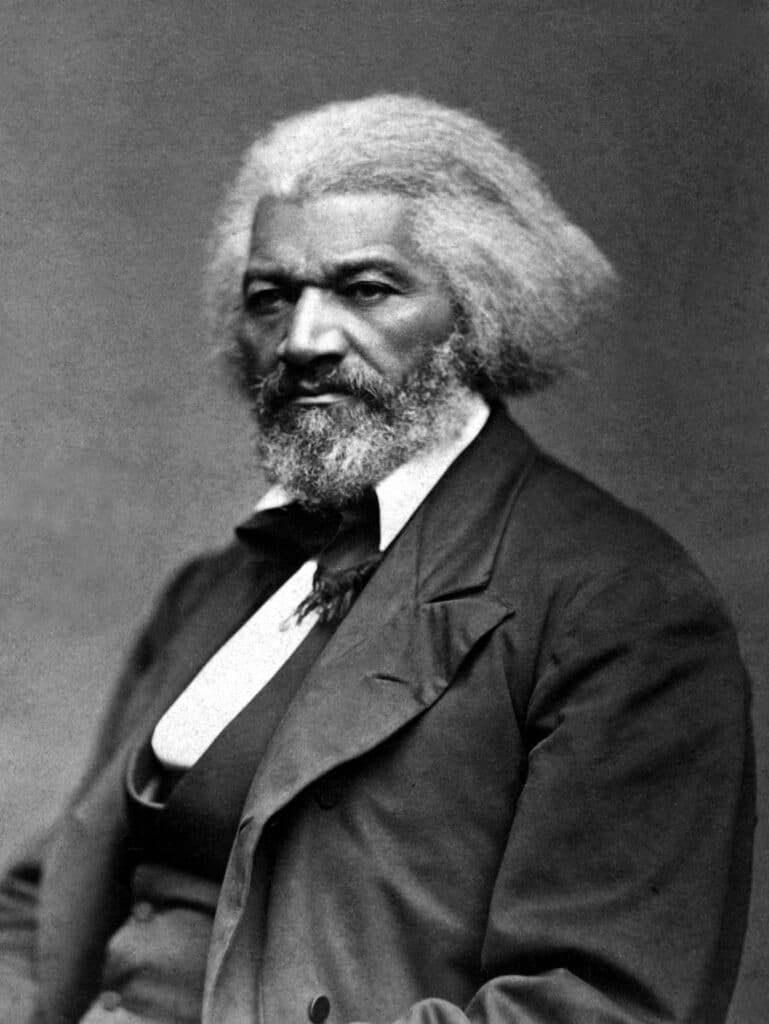
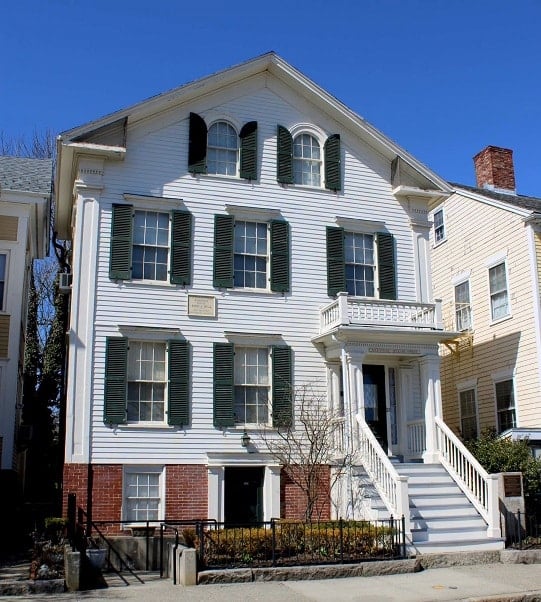
The Nathan and Mary “Polly” Johnson House at 21 Seventh Street was the home of two prominent African American abolitionists who provided assistance to people escaping slavery. In September 1838, the house also became the first home in freedom for Frederick Douglass and his wife, Anna Murray.

At the time, Douglass was known as Frederick Augustus Washington Bailey. After escaping slavery in Maryland, he and Anna arrived in Newport, Rhode Island, on Sept. 17, 1838. They were assisted by Quakers Joseph Ricketson and William C. Taber before continuing to New Bedford.
In New Bedford, they were welcomed by Nathan Johnson, who provided them with shelter at his home on Seventh Street. Johnson also gave Bailey the surname “Douglass,” which he would use for the remainder of his life.
Douglass would go on to become one of the nation’s best-known abolitionists, orators, writers and advocates for equal rights.
The Johnson House is therefore closely associated with the beginning of Douglass’ life as a free man.
A family committed to abolition
Nathan Johnson, who lived from 1797 to 1880, operated a store and was one of New Bedford’s leading confectioners. His wife, Mary, known as Polly, was a well-known caterer.
The Johnsons were active in New Bedford’s antislavery movement. Records document Nathan Johnson’s involvement in antislavery activities as early as 1822.
Their involvement extended to providing assistance to people escaping slavery. Records from the New Bedford Overseers of the Poor document that at least one other freedom seeker found shelter at 21 Seventh Street.
Based on Johnson’s documented antislavery activities, historians believe other fugitives may also have been sheltered at the house.
The Johnsons were also connected to the property at 17–19 Seventh Street, which housed New Bedford’s first Society of Friends Meeting House. The Johnsons purchased the property around 1830.
Both properties are associated with New Bedford’s antebellum abolitionist movement.
A house with two structures
The Johnson House is itself a combination of two historic structures.
The earlier portion dates to approximately the 1820s. A second structure, dating to about 1857, was added to the original building, with the two portions joined during the 1850s.
The front portion was built in the attic, while the rear section has characteristics of a vernacular Georgian/Federal building.
The property is located within the County Street Historic District and was listed in both the National Register of Historic Places and the Massachusetts State Register in 1976.
The Nathan and Mary (Polly) Johnson properties at 21 Seventh Street and 17–19 Seventh Street were later designated National Historic Landmarks by the U.S. Department of the Interior. The designation recognizes the Johnsons’ role in antebellum efforts to end slavery and their association with Frederick Douglass and other freedom seekers.
Preservation efforts
The New Bedford Historical Society purchased the Johnson House in December 1998 with assistance from the Waterfront Historic Area League, or WHALE, and the Massachusetts Historical Commission.
The society subsequently developed a three-phase program for preservation and restoration.
The first phase, completed in June 2000, focused on investigating the historic features of the property and developing construction plans and specifications for exterior repairs and restoration.
Preservation of the Johnson House provides an opportunity to interpret an important part of New Bedford’s history at the site where it occurred.
The house is significant not only for its architecture, but also for its connection to the people who challenged slavery and assisted those seeking freedom.
For Frederick Douglass, 21 Seventh Street marked the beginning of a new life.
He arrived in New Bedford as a man who had escaped slavery.
He left the Johnson House with a new name—and eventually became one of the most powerful voices in the nation’s struggle against slavery.